
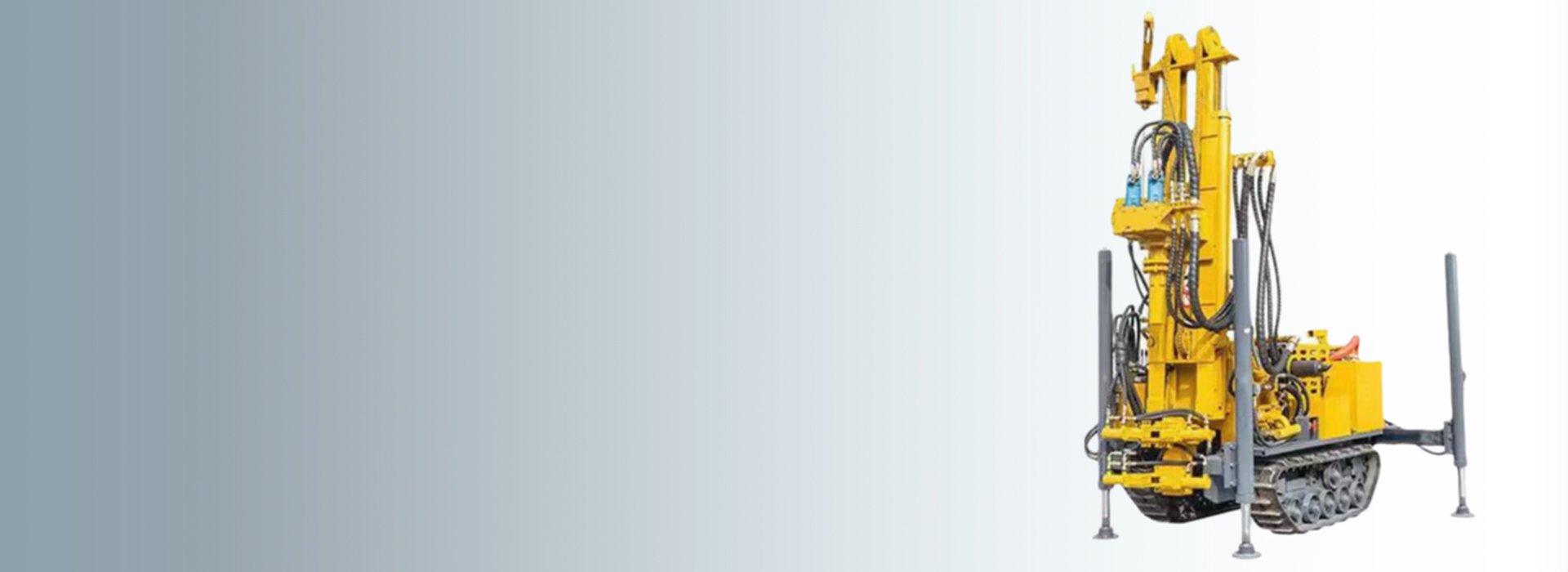


Hydraulic Water Well Drilling Rig
A crawler hydraulic water well drilling rig is a modern drilling equipment with mature technology, reliable performance, and wide application. It has many characteristics and advantages.
- High Mobility and Easy Transfer: Crawler chassis enabling access to remote and hard-to-reach areas, adaptable to complex terrain.
- High Efficiency: Hydraulic transmission and high output torque, advanced hydraulic and control systems, ensure precise and efficient drilling.
- High Well Quality: Precise hydraulic feed pressure control, constant drilling pressure, and verticality improve setup and operation.
- Versatile: Replaceable drilling tools and auxiliary equipment encompass a wide range of drilling applications.
- Durability and Reliability: Robust design and components, withstand harsh working conditions and demanding environments, ensure long service life and reliability.
- Enhanced Safety: Advanced safety features, remote control, and automation systems protect operators and reduce the risk of accidents.
Your Leading Hydraulic Water Well Drilling Rig Manufacturer in China
Pailien, a hub for hydraulic machinery production, boasts over a decade of experience in product R&D, design, and manufacturing. We can provide practical and comprehensive solutions tailored to customers’ well-drilling needs.
Our hydraulic water well drilling rigs include the PLE-QY200, PLE-QY260, PLE-QY350, and PLE-QY600. The hydraulic water well drilling rigs are rotary or percussive water well drilling rigs that utilize hydraulic transmission as their primary power source. They are highly efficient, versatile, and lightweight drilling equipment.
The hydraulic water well drilling rigs are primarily used for drilling wells for general water wells, agricultural irrigation wells, and other applications. They are particularly well-suited for water well construction in mountainous areas and various rock formations.
Hydraulic water well drilling rigs can be said to be the drilling experts in today’s industrialized society. Hydraulic water well drilling rigs have excellent drilling performance and leading technology. Hydraulic water well drilling rigs have become the first choice for water well engineering and drilling construction operations because of their low consumption, labor saving, and strong practicality.
Different Hydraulic Water Well Drilling Rig Models for Your Choice
PaiLiEn hydraulic water well drilling rigs are available in four models: the 200, 260, 350, and 600.
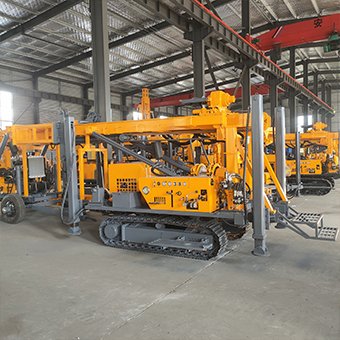
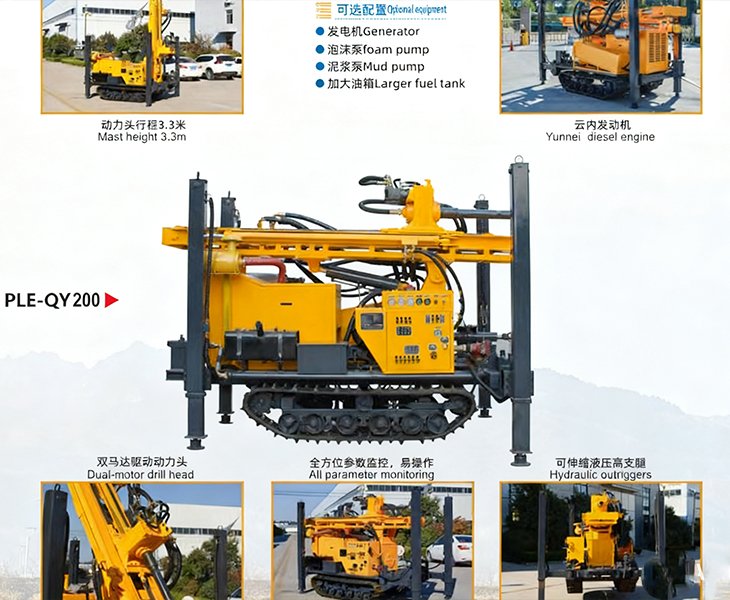
A 4800 Nm rotary torque and a 3300mm thrust stroke, allowing it to drill 3 meters in one go. It’s suitable for shallow water well drilling.
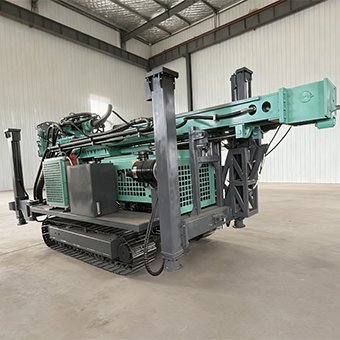
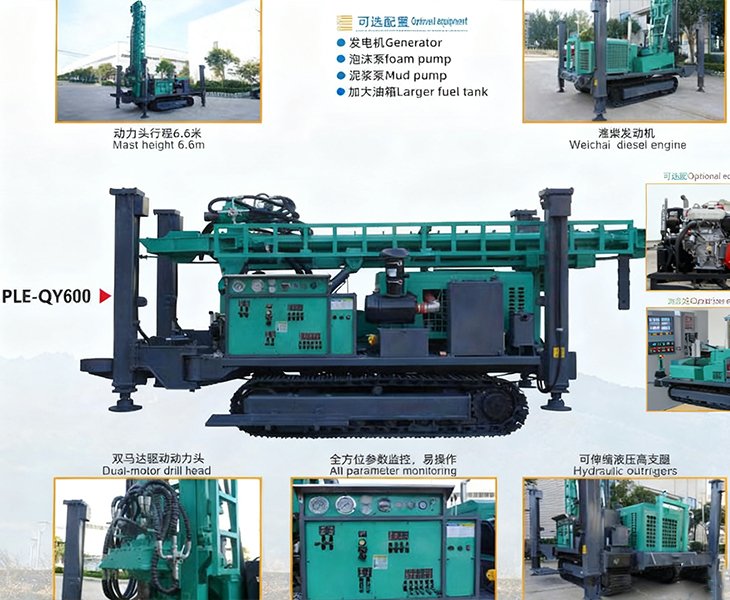
A 5500 Nm rotary torque and a 6600mm thrust stroke, allowing it to drill 6 meters in one go, ensuring high drilling efficiency.
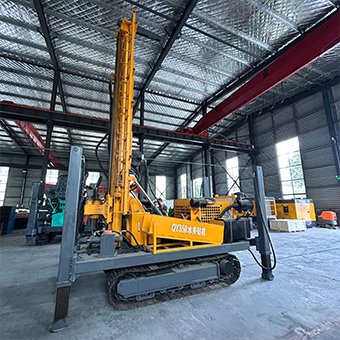
an 8000 Nm rotary torque and a maximum drilling depth of 350 meters. It’s suitable for drilling in complex areas.
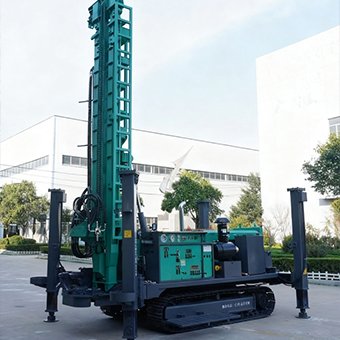
A 12000 Nm rotary torque and a maximum drilling depth of 600 meters. It’s suitable for drilling in mountainous areas with low surface water levels.
Construction Process of Hydraulic Water Well Drilling Rig
The construction process of a hydraulic water well drilling rig is a systematic one, primarily consisting of the following steps.

First, corresponding on-site positioning and investigation should be carried out to understand the local groundwater level, water layer depth and geological structure, and preliminarily determine the drilling location.

After the drilling site is determined, the devices that will definitely be used, including the hydraulic water well drilling rig, drill pipe, and water pump, is assembled and set up based on the site’s space, geological structure, and construction requirements.

The mud pit, mud pump, high-pressure hose, and other equipment required for drilling are connected, and sufficient clean water is prepared in advance for use when conducting well-drilling operations.

This action is the key of hydraulic water well drilling. After the first drill pipe and drill bit are installed, the drilling rig can be started and the drill bit set to low speed. Simultaneously, the mud pump begins to pump mud.

After starting the drill rig, the hydraulic system continues to apply downward pressure to the drill pipe, giving the drill bit sufficient force to break up rock formations it encounters and allow continued drilling.

Once the drilling equipment is operating normally, the drill bit is changed in time according to the different geographical features. The mud pump operation mode is adjusted or casing is added according to the site conditions. Drilling operations are stopped after reaching the aquifer and well completion begins.
Hydraulic Motor for Hydraulic Water Well Drilling Rigs
As a fundamental part of the hydraulic water well drilling rig’s power system, the hydraulic motor directly impacts the rig’s torque output, RPM, thrust, and drilling efficiency. The PLE-QY series hydraulic water well drilling rigs are equipped with a high-speed hydraulic motor. The power unit boasts a maximum swing torque of 12,000 Nm and a thrust stroke of 6,600 mm, fully ensuring both drilling speed and efficiency.
Hydraulic System Settings for Hydraulic Water Well Drilling Rigs
The hydraulic motor parameters of a hydraulic water well drilling rig are based on the rig’s overall hydraulic system. The pump control system typically controls the drilling speed and main winch mechanism. The valve control system, through speed regulation and throttling, works in conjunction with a multi-way reversing valve to supply oil to the main motor, effectively controlling and lowering costs. The load sensing and closed-loop system are particularly well-suited to various drilling operations, achieving significant energy savings.
PLE-QY Hydraulic Water Well Drilling Rig Option Condition

The geological conditions of the drilling location is a very big impact factors in choosing a hydraulic water well drilling rig. Unconsolidated formations, rock formations, and complex formations with alternating soil and rock require different types of hydraulic water well drilling methods.

Different well depths require different well diameters. Wells are categorized by depth into shallow wells (less than 150 meters), medium-deep wells (150-500 meters), and wells greater than 500 meters.

The size of the drill site and is easy to enter or not influence the selection of a specific hydraulic water well drilling rig model.
Company Strengths
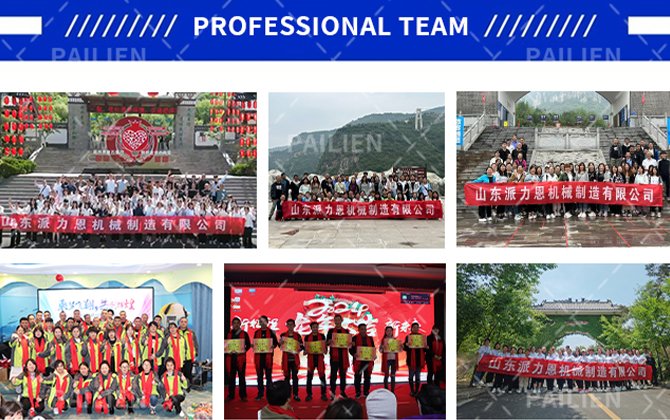
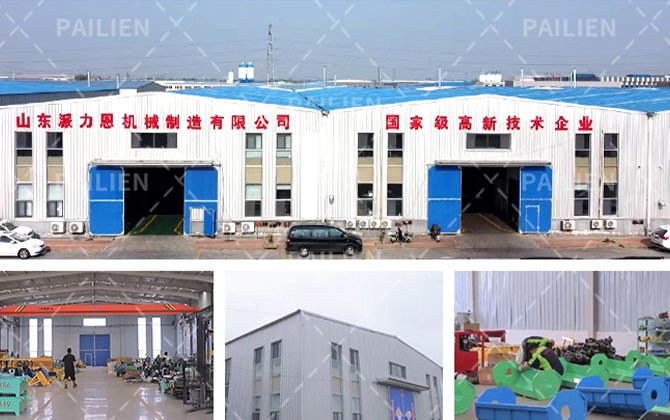
Pailien, a leading manufacturer of water well drilling rigs, is an integrated industrial and trading enterprise specializing in product development, manufacturing, and sales. The company has obtained ISO9001 international quality certification, AAA-level quality management system certification, a national AAA-level demonstration unit for quality, reputation, and service, 3A-level credit enterprise certification, Shandong Province Contract-abiding and Credit-worthy Enterprise certification, CE European safety certification, and SGS testing and certification. We are able to provide customers with professional solutions to water well drilling rig problems.
Hydraulic Water Well Drilling Rig
With the advancement of the industrial age, hydraulic water well drilling rigs have become a drilling equipment that recognized and accepted by the public, signaling the evolution of drilling technology towards much more efficiency, intelligence, and reliability. Hydraulic water well drilling rigs have become a mainstream feature of the drilling market. Leveraging our comprehensive strength, Pailien Machinery can help to suggest the better and practical and effective hydraulic water well drilling rigs to users on the bsis of their specific drilling depth, diameter, and geological conditions.
- The Key Partof Circulation Power
The key function of a mud pump is to provide the circulation power for the drilling hydraulics of a hydraulic water well drilling rig. The mud pump generates high pressure and then transports the drilling fluid from the mud tank through a high-pressure pipeline and the inner bore of the drill pipe to the bottom of the well. Without a mud pump, the entire drilling fluid circulation system would not function properly.
- Rock Debris Removal
During the drilling process of a hydraulic water well drilling rig, the mud pump uses its own pressure to pump the drilling fluid to the bottom of the well, simultaneously mixing and blending the rock powder and debris generated by the drilling process. The flow rate and viscosity of the drilling fluid are used to successfully carry the rock debris to the surface. This operation ensures a clean and tidy bottom of the well and allows the drill bit to perform drilling operations smoothly and continuously.
- Mud pumps can effectively reduce drill bit temperature and friction between the drill bit and the rock. When a drill bitof hydraulic water well drilling rigencounters rock, it generates significant heat and creates intense friction with the rock. A mud pump continuously flows drilling fluid through the drill bit, significantly lowering its temperature while also effectively preventing wear and tear, ensuring smooth drilling of the hydraulic water well drilling rig.
- Protective layer for the wellbore
Drilling fluid forms a mud cake on the wellbore wall, plugging microcracks and effectively protecting the wellbore from collapse.
- Insufficient hydraulic system pressure
Causes:
The hydraulic pump is damaged or severely worn, causing leak inside and loss of working ability to generate the required drilling pressure.
The hydraulic oil viscosity is insufficient, the hydraulic oil is contaminated, or the hydraulic oil volume is too low.
The seals in the hydraulic motor are broken.
The control valves operating the hydraulic system are sluggish.
Possible engine failure
Cause: The diesel engine’s fuel system is faulty, or the air intake system is clogged.
Motor voltage is unstable, or there’s a problem with the wiring.
The instrument display is abnormal.
Cause: The instrument is faulty, or the signal receiving sensor is faulty.
The electronic control system is not operating properly.
Cause: The programmable controller is faulty, a short circuit has occurred, or there’s poor contact.
- If you encounter a soil layer during drilling, you need to select the appropriate drilling tool.
If you encounter a clay materials, you are able to use an auger drill rod to bring the clay to the surface.
If you encounter a sandy or silty geology, you can adopt a bottom-opening drill bit to prevent loose sand and soil from falling.
- Drilling fluid can be used to contain the wellbore wall and effectively remove stone fragments and slag formed during drilling operations.
3. You can add a retaining wall pipe and use the hydraulic system to press the retaining wall pipe into the underground soil to isolate the unstable soil layer.
Personnel safety must be emphasized. All on-site workers need to wear work clothes and safety signs. Safety and danger zones must be established, and non-on-site construction personnel are prohibited from entering the site. When it needs a lot of people to operate it, their movements must be coordinated, and their instructions must be very simple and easy to understand.
Regarding the environment, rock debris, slag, and mud generated by drilling must be handled comply with environmental protection requirements in the drilling area to prevent local pollution.