
Handheld Hydraulic Rock Splitters
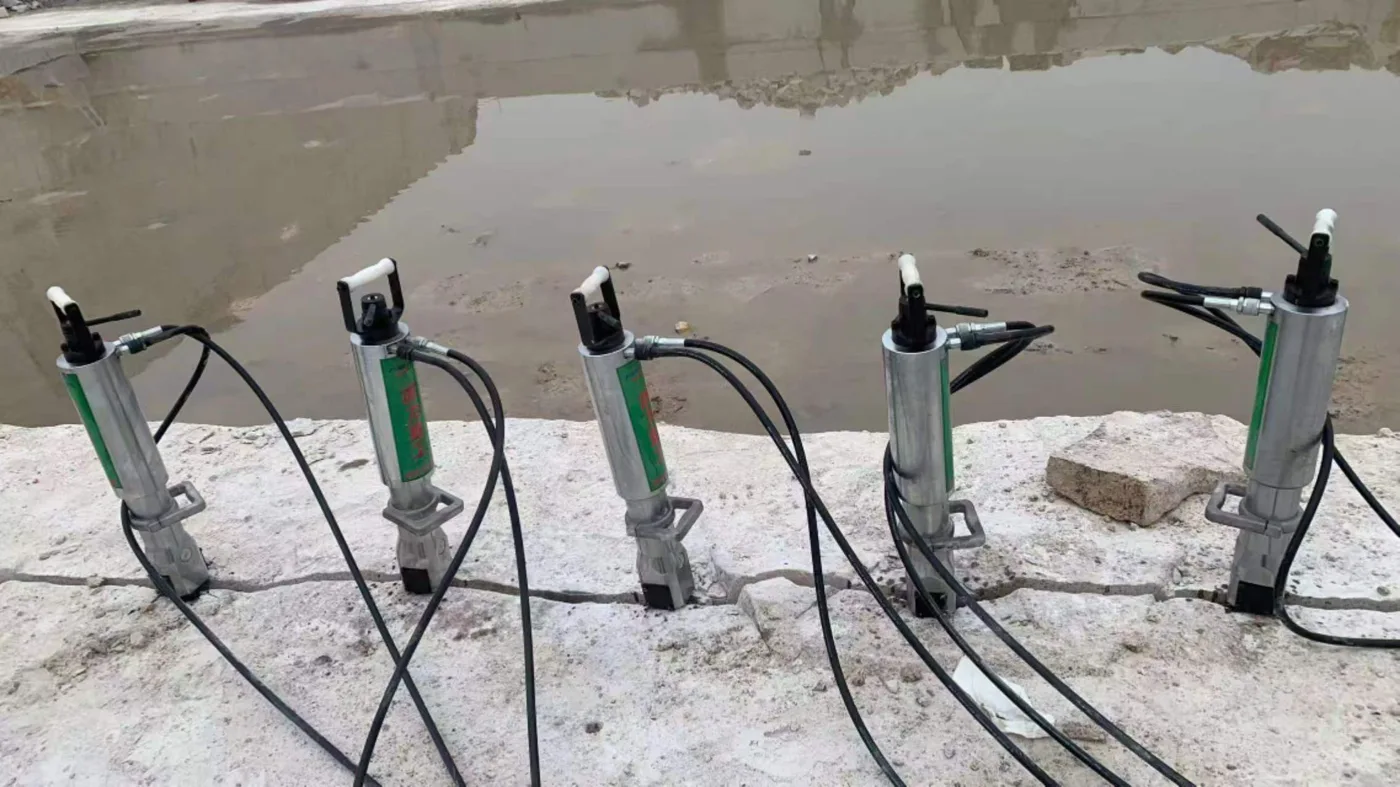
Low vibration during splitting. Steady hydraulic force opens a fracture in rock or concrete without blasting or repeated hammer blows.
Compare models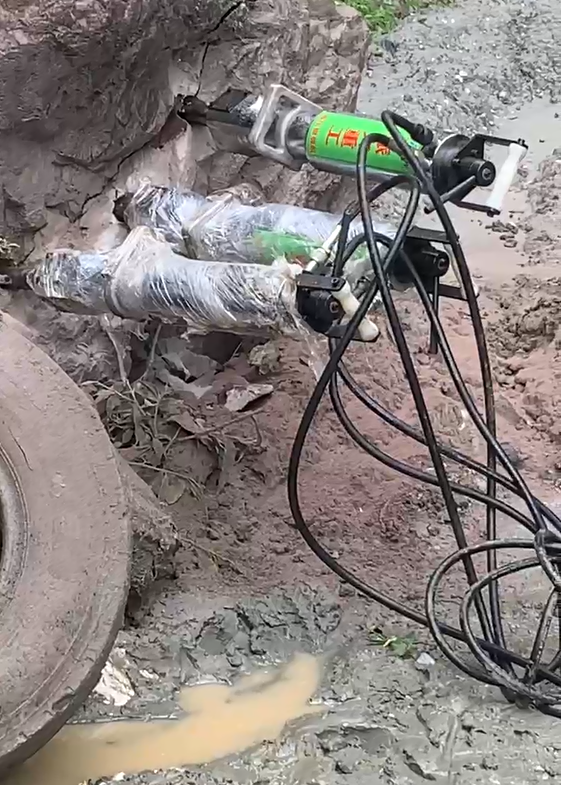
Work in tight spaces
Position the compact splitting head at the borehole and stage the separate power pack where there is room to work.
See applications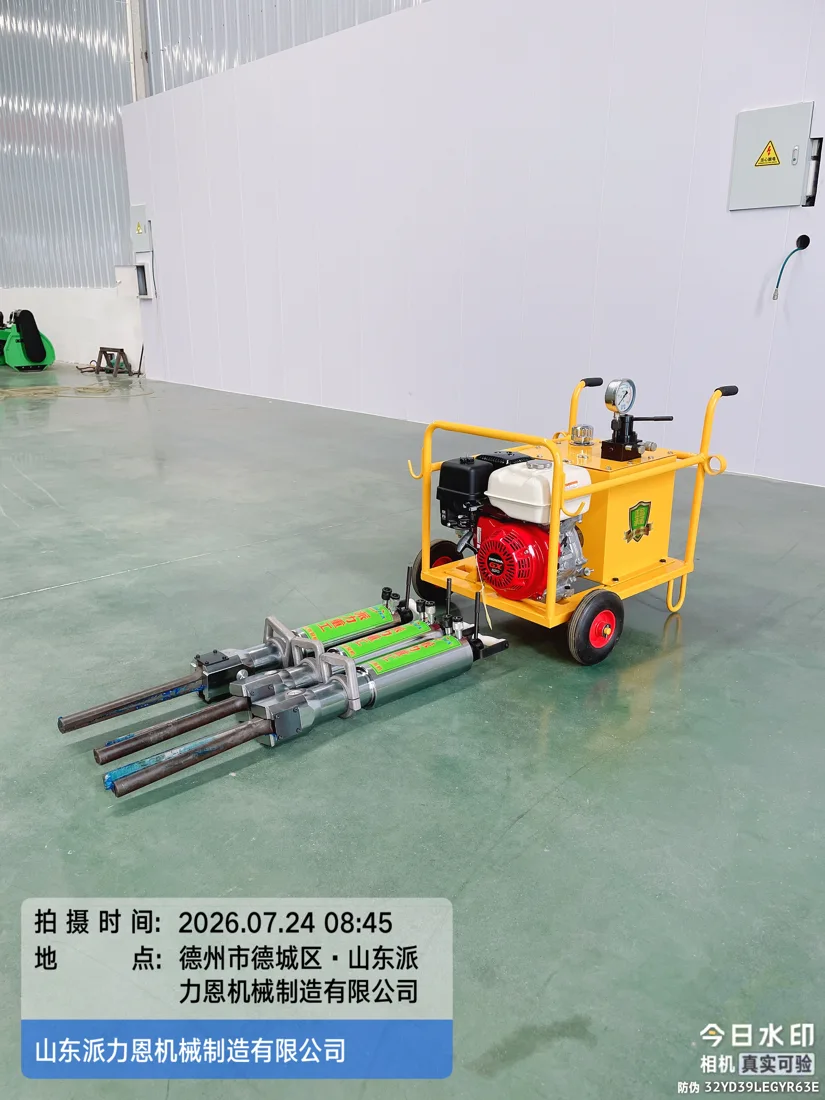
Run multiple heads from one pack
Choose an electric, gasoline or diesel power pack to suit the site. A compatible manifold can supply several splitting heads.
Compare power packsMODEL COMPARISON
Choose by bore size and wedge reach
Use a drill bit that matches the specified bore diameter and drill deep enough to seat the wedge assembly. Start with the available drilling space, the thickness of the material and the size of the pieces the crew can remove. Head weight increases across these three models. Take it into account if the crew will reposition the splitter frequently in a confined work area.
| Model | Bore diameter | Bore depth | Wedge length | Head weight |
|---|---|---|---|---|
| PLE-250 | 42 mm | 500 mm | 250 mm | 36 kg |
| PLE-350 | 46 mm | 600 mm | 350 mm | 38 kg |
| PLE-450 | 50 mm | 700 mm | 450 mm | 40 kg |
Check the required bore diameter and depth and the included wedge assembly when reviewing the quote.
PLE-250
The PLE-250 uses a 42 mm bore and a 250 mm wedge. At 36 kg, it is the lightest head in the range, which can help when moving between rooms, trench sections or scattered boulders.
PLE-350
The 350 mm wedge extends farther into the material. The PLE-350 requires a 600 mm bore depth. Check that your drill can make a consistent 46 mm bore and that the additional drilling fits the planned cycle.
PLE-450
The longest wedge in the range calls for a 50 mm bore and a listed depth of 700 mm. Consider it when the section thickness and drilling access allow the longer assembly to seat properly.
Electric, gasoline and diesel packages
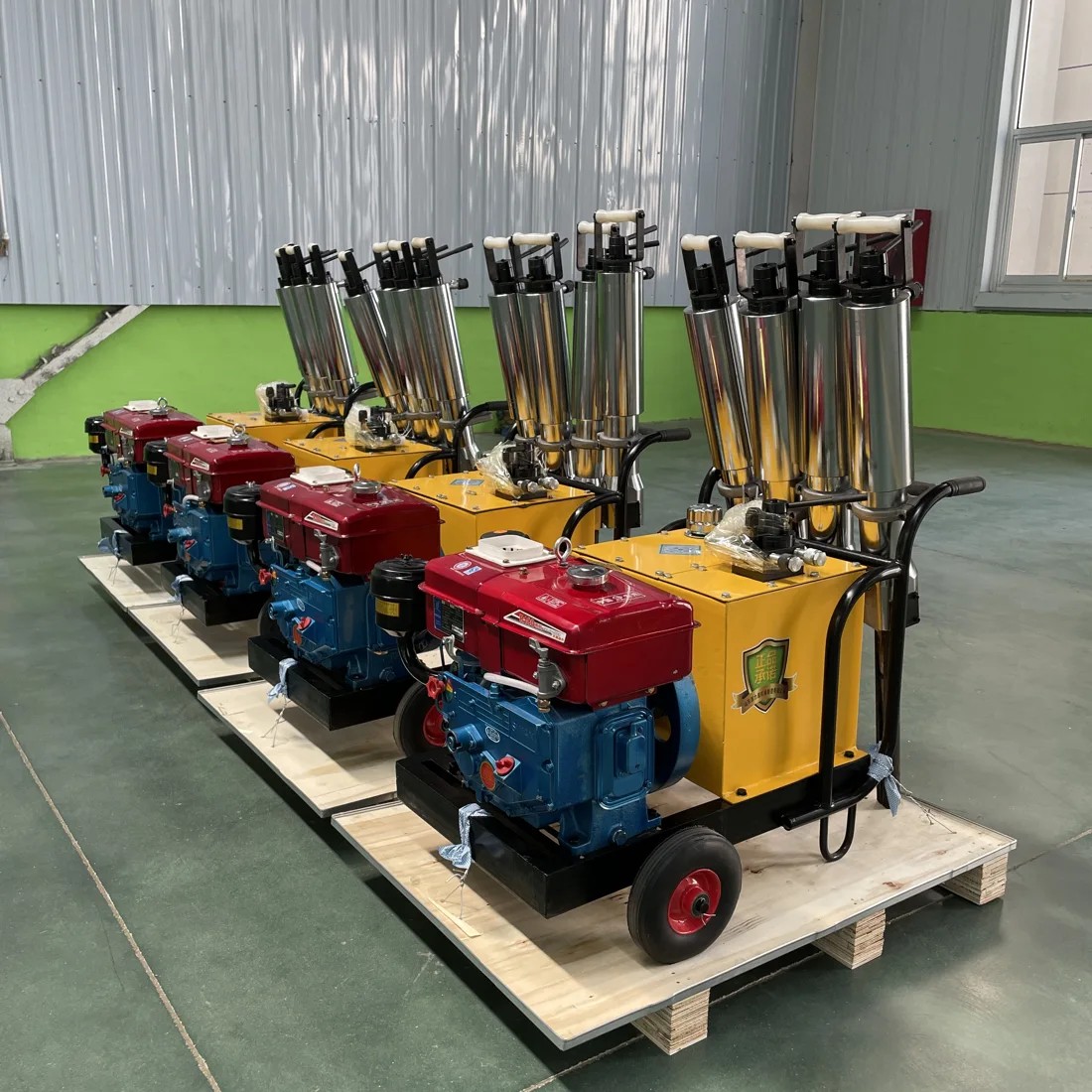
The power pack supplies hydraulic oil to the heads through hoses. Choose the pack by the power available on site, the number of heads in the package, and whether the crew plans to operate them in sequence or together. The photos below show examples of packaged equipment.
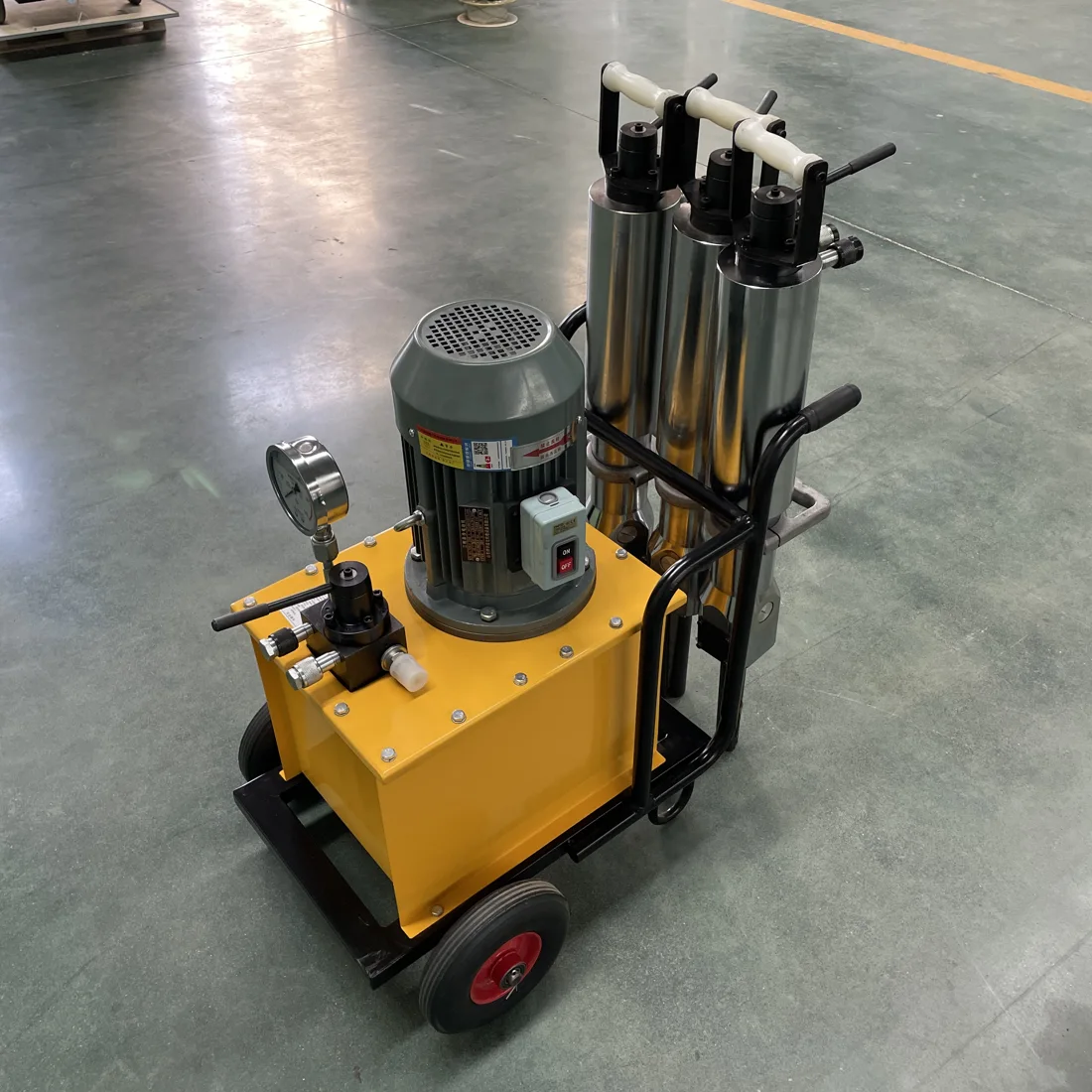
Electric power pack
For sites with a compatible electrical supply. Check voltage, phase and available power before ordering. The electric pump produces no engine exhaust at the work area.
Gasoline power pack
For outdoor work where a suitable electrical supply is unavailable. Consider how often the pump station needs to move between work areas and where it can sit while the crew handles the heads.
Diesel power pack
A diesel pack suits outdoor projects that already use diesel equipment or have fuel available on site. Confirm engine and pump specifications, lifting arrangements and the manifold supplied with the package.
| Power pack | Motor or engine specification | Oil reservoir | Power pack weight |
|---|---|---|---|
| Electric | 4 kW, 380 V | 40 L | 90 kg |
| Gasoline | 8 hp | 40 L | 110 kg |
| Diesel, air-cooled | 6 or 8 hp | 40 L | 120 kg |
| Diesel, water-cooled | 6 or 8 hp | 40 L | 120 kg |
Confirm the motor or engine specification, cooling method and power pack weight before ordering.
Pack weight affects how the crew can move between work areas. A wheeled unit may be practical on a level floor, while a trench or stepped access route may require the pack to stay at a staging point. Measure the actual hose route around corners and obstructions. For an electric unit, confirm the site supply against the motor nameplate and allow space for the power lead and hydraulic hoses.
How the handheld system works
A hydraulic cylinder pushes a center wedge between two outer wedges. The outer wedges press sideways against the wall of a predrilled hole. The surrounding material develops tensile stress and may crack as the wedges spread. The shape of the section, natural joints and the position of an exposed face all influence how the fracture travels.
Head and wedge assembly
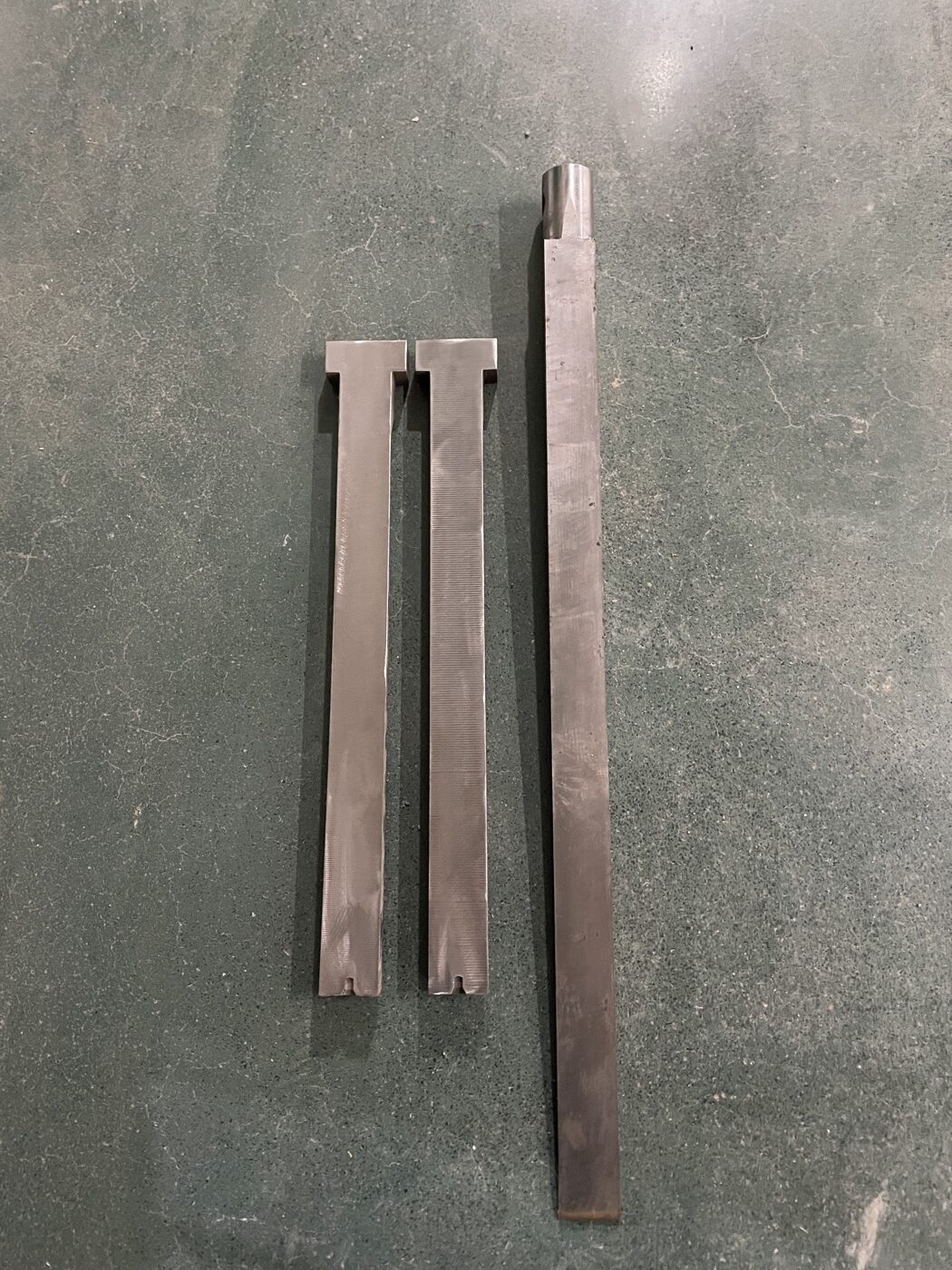
The crew positions the splitting head, and a separate power pack supplies the hydraulic pressure. A shorter wedge fits a shallower bore. A longer wedge reaches farther into the section when the hole depth and clearance allow it. Match the replacement wedge set and its components to the exact head model when specifying spares.
Hoses and connections
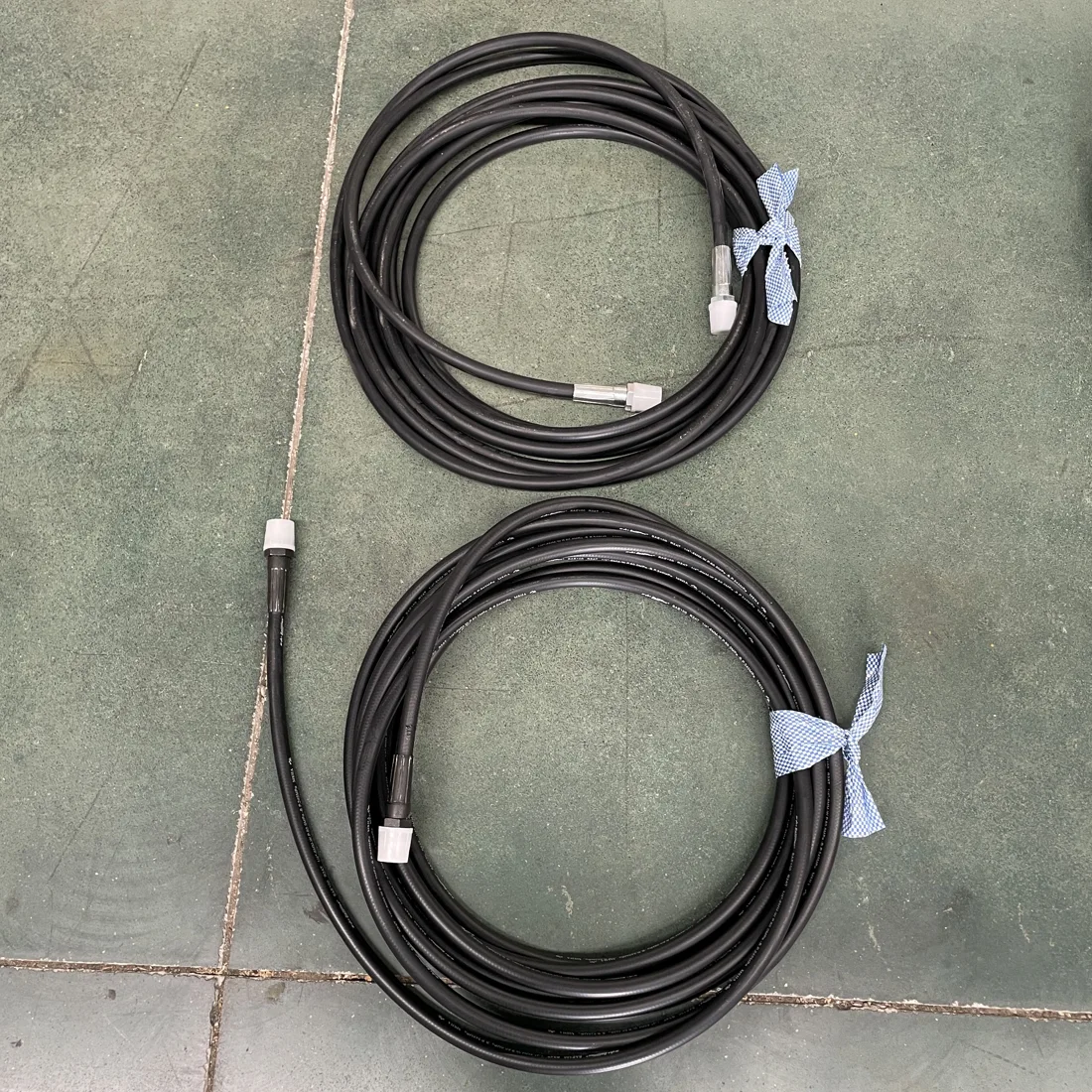
Allow enough hose length to keep the power pack in a practical position while the operator moves between holes. Check which hoses, couplings and controls are included. For a multi-head package, verify the number of outlets and how the manifold controls each branch.
Single and multiple heads
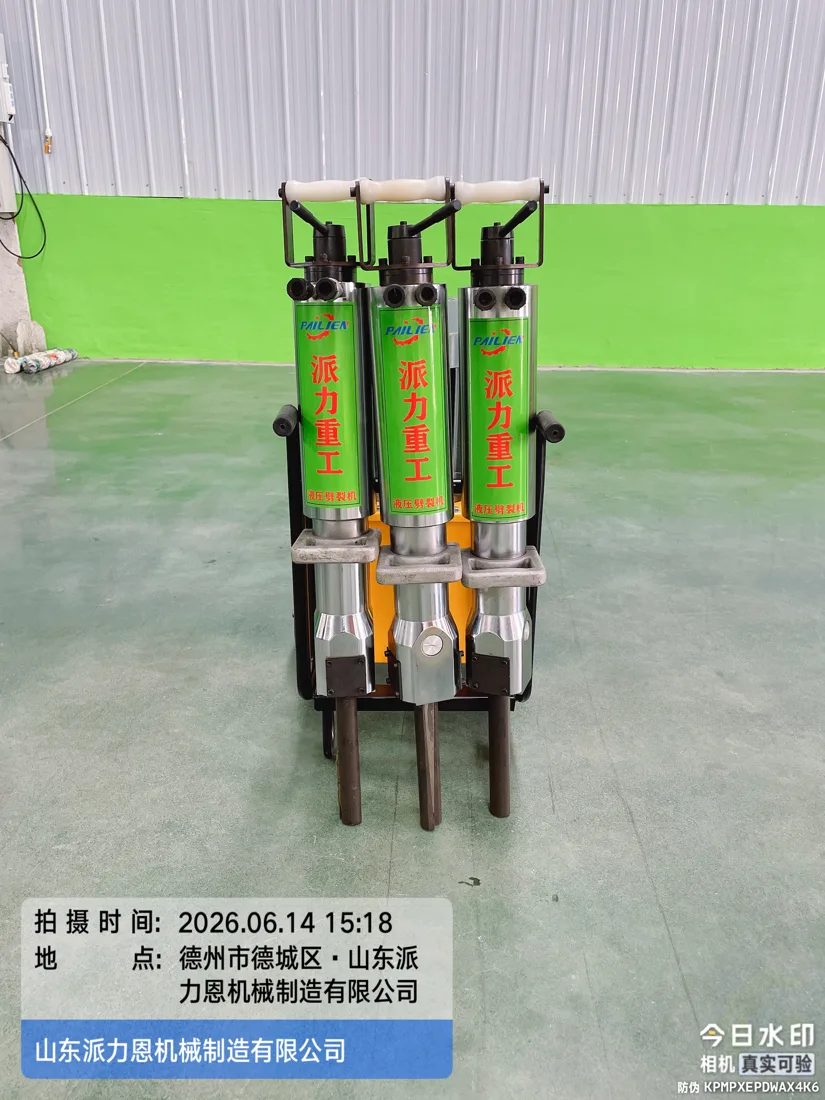
A single head can suit isolated boulders or a small opening. A multi-head package lets a crew stage heads at different holes when the work face and staffing allow it. Confirm how many heads the package includes and how many the specified power pack and manifold can operate at once.
Predrilling and fracture development
Use a separate drill to prepare holes that match the selected head. Bore alignment and remaining drill cuttings affect whether the wedge can seat. Look for a free face that gives the rock or concrete space to move, then assess the newly exposed surface before planning the next section.
Match the package to the job
Confined rock excavation
For trenches and enclosed access routes, check room for the drill as well as for the splitting head. A compact head can reach a location where an excavator cannot operate, but the crew still needs space to align it, route the hoses and remove the fragments. Plan how to move the head along the access route and how often it will need to be repositioned.
Selective concrete removal
Where the job calls for removing a defined section, plan how the released concrete will be supported and cleared. Reinforcement may keep pieces connected after the concrete cracks. Account for cutting or separating exposed steel in the work sequence and in any productivity estimate.
Isolated boulders
Check the shape, visible joints and support of the boulder before selecting the head. A natural free face can give the fractured piece room to move. Match the target fragment size to the equipment available for lifting or loading, so the split leaves pieces the crew can actually remove.
Repeated splits along a work face
Compare a single head with a multi-head setup over a representative section. Record positioning, drilling, splitting and clearing times as well as the volume removed. If drilling or loading dominates the cycle, adding heads may offer little improvement until that step is addressed.
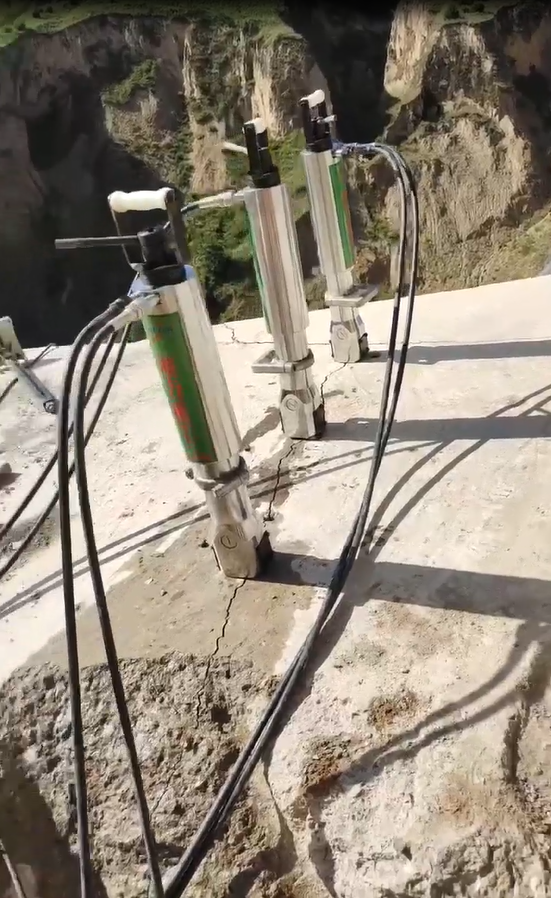
What to record during a site trial
Choose a trial section that reflects the job’s material, thickness and access. A loose boulder may separate readily because it has exposed sides. A rock ledge with few exposed faces can behave differently even when the rock type is the same. Photograph the original work face and keep the trial notes with the equipment configuration, so another crew can understand the result.
Verify drilling and fit
Record the bit diameter, the depth achieved and whether the head seats consistently. Track time spent clearing holes and moving the drill. If holes vary in diameter or the head cannot seat, resolve the fit before using the trial to compare splitting results.
Check the pieces you can remove
Record where the crack formed, how far it travelled and whether the resulting fragments could be loaded or lifted with the available equipment. If pieces remain attached by reinforcement or rock bridges, count the extra separation work. Use the outcome to judge whether the package meets your target fragment size.
Measure a complete cycle
Time the work from initial positioning through removal of the broken material. PAILIEN lists 5–15 seconds for the splitting step on all three models. Estimate shift output using the full cycle, including drilling, moving the equipment and clearing the broken material.
Prepare the equipment for the next shift
Use the model’s service instructions to check the wedges, hoses, couplings and pack before the next shift. Keep the wedge set identified by head model so replacement parts can be matched to the equipment in use. If a crew reports slower work, note whether the delay came from drilling, tool movement, splitting or fragment removal. That makes it easier to decide whether to inspect the head, change how the crew stages the equipment, or review the drilling and clearing arrangements.
Handheld splitter FAQ
Can I use my existing drill?
Check whether it can achieve the specified hole diameter and depth in the actual rock or concrete. Also check working clearance for the drill and splitter and whether the bit maintains the required diameter as it wears.
Does handheld mean the entire package is carried by hand?
The operator guides the head into position by hand. The separate pump station supplies hydraulic power. Head weights in this series range from 36 to 40 kg, so plan how the crew will lift and move each head, along with the hoses and pack.
Can several heads share one pump?
Yes, with a compatible pack and manifold. Confirm the number of supported heads, whether they can operate simultaneously, and the supplied hose lengths and fittings for the intended arrangement.
How can I estimate output per shift?
Time a trial in material that represents the job. Include drilling, moving the heads, splitting, steel separation where applicable and fragment removal. Record the volume that was removed and use that complete cycle to estimate output.
What should the quotation include?
Ask for the head model and quantity, wedge assemblies, pack and motor or engine specification, manifold, hoses and couplings. Check whether the quote includes drill bits, spare wedges, seals and other service parts.
Request a handheld splitter quote
Share site photos, material type, section thickness, target fragment size and your drill’s available bore sizes. Include the available power supply and how many splitting heads you expect to use.