
Excavator Rock Drill and Splitter
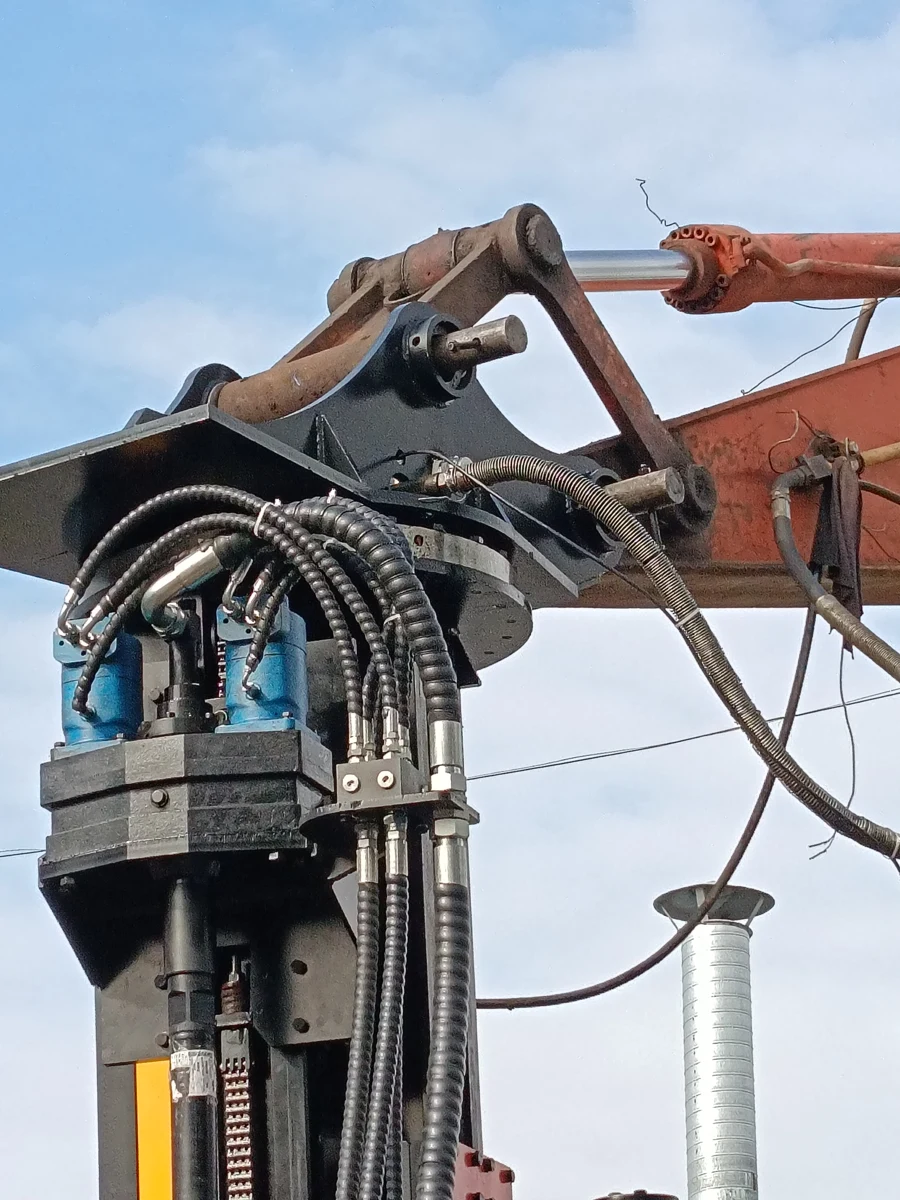
- Rock drill and hydraulic rock splitter in one attachment
- Hydraulic or pneumatic drilling options
- Rock splitting without explosives
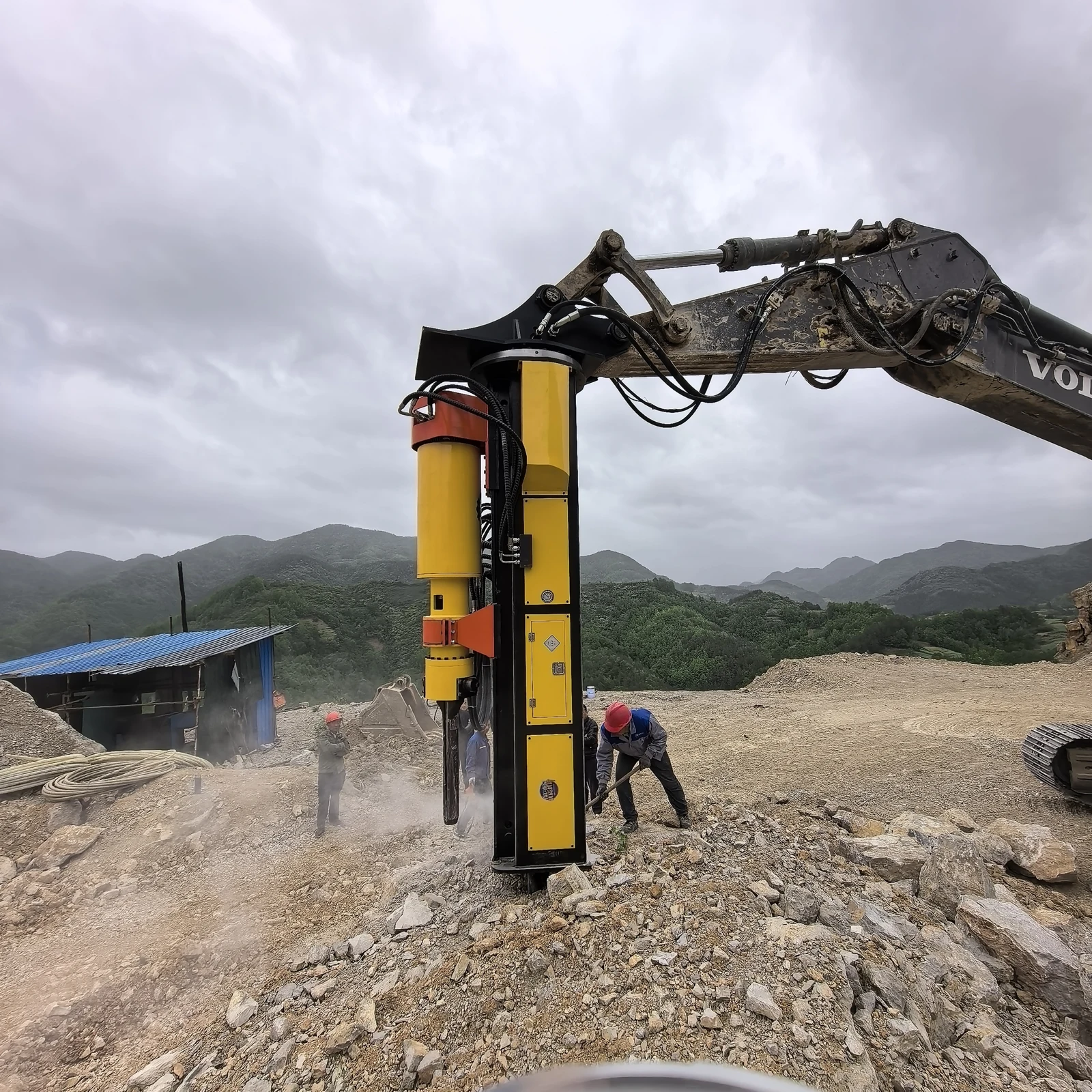
Hydraulic and pneumatic configurations
Both PLE-200 configurations have a listed bore diameter range of 90–115 mm. Their listed drilling depths, excavator weight classes, and power requirements differ. For larger bores, see the pneumatic PLE-300 and PLE-400 in the model table.
Fully hydraulic PLE-200
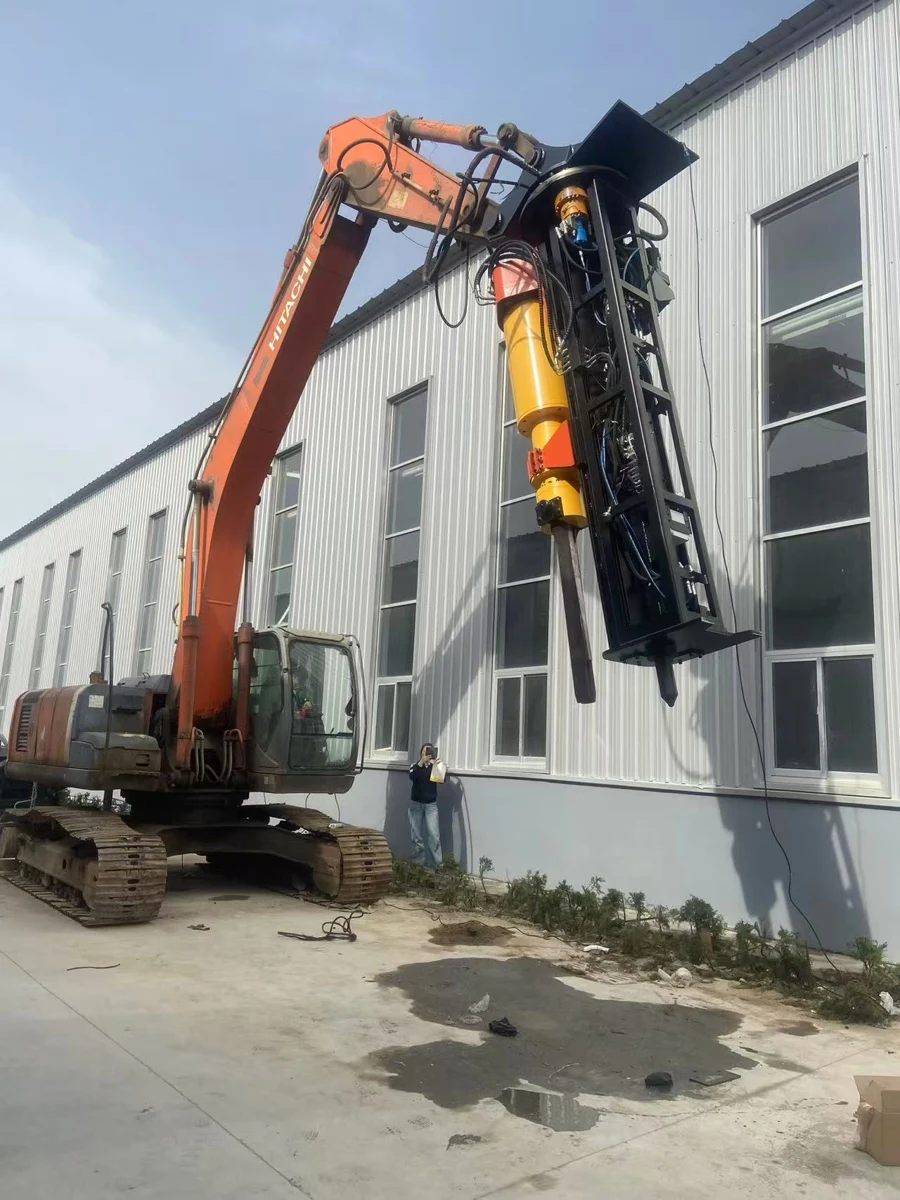
Hydraulic power drives the drill and the splitting assembly. The fully hydraulic model operates without a separate air compressor. To check compatibility, provide the flow and pressure available from your excavator’s auxiliary hydraulic circuit.
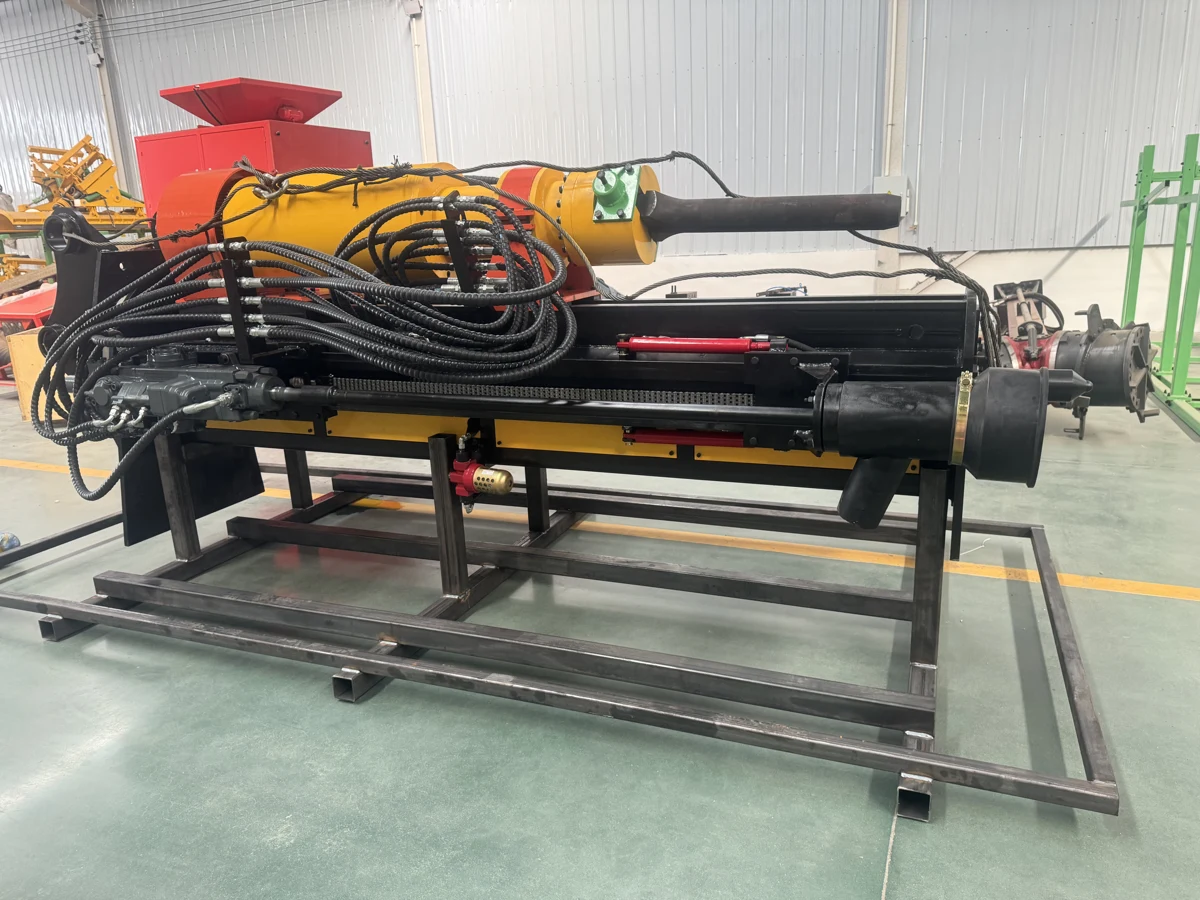
Pneumatic PLE-200, PLE-300, and PLE-400
Compressed air powers the drilling unit. Hydraulics power the splitter, so this configuration requires both a compatible air supply and a suitable hydraulic circuit. If a compressor is already on site, provide its rated delivery and operating pressure so we can check the proposed setup.
| Configuration | Bore diameter | Drilling depth | Listed excavator weight class | Rated hydraulic flow |
|---|---|---|---|---|
| PLE-200 fully hydraulic | 90–115 mm | 2,000 mm | 20–50 t | 210 L/min |
| PLE-200 pneumatic | 90–115 mm | 1,700 mm | 20–28 t | 210 L/min |
| PLE-300 pneumatic | 135 mm | 2,200 mm | 30–38 t | 240 L/min |
| PLE-400 pneumatic | 150 mm | 2,200 mm | 40–50 t | 280 L/min |
Figures are from the product specification sheets. Rated hydraulic flow is separate from compressor air delivery. We confirm the supplied drill diameter and the carrier and power requirements for the configuration in your quote.
How an excavator-mounted rock drill and splitter works
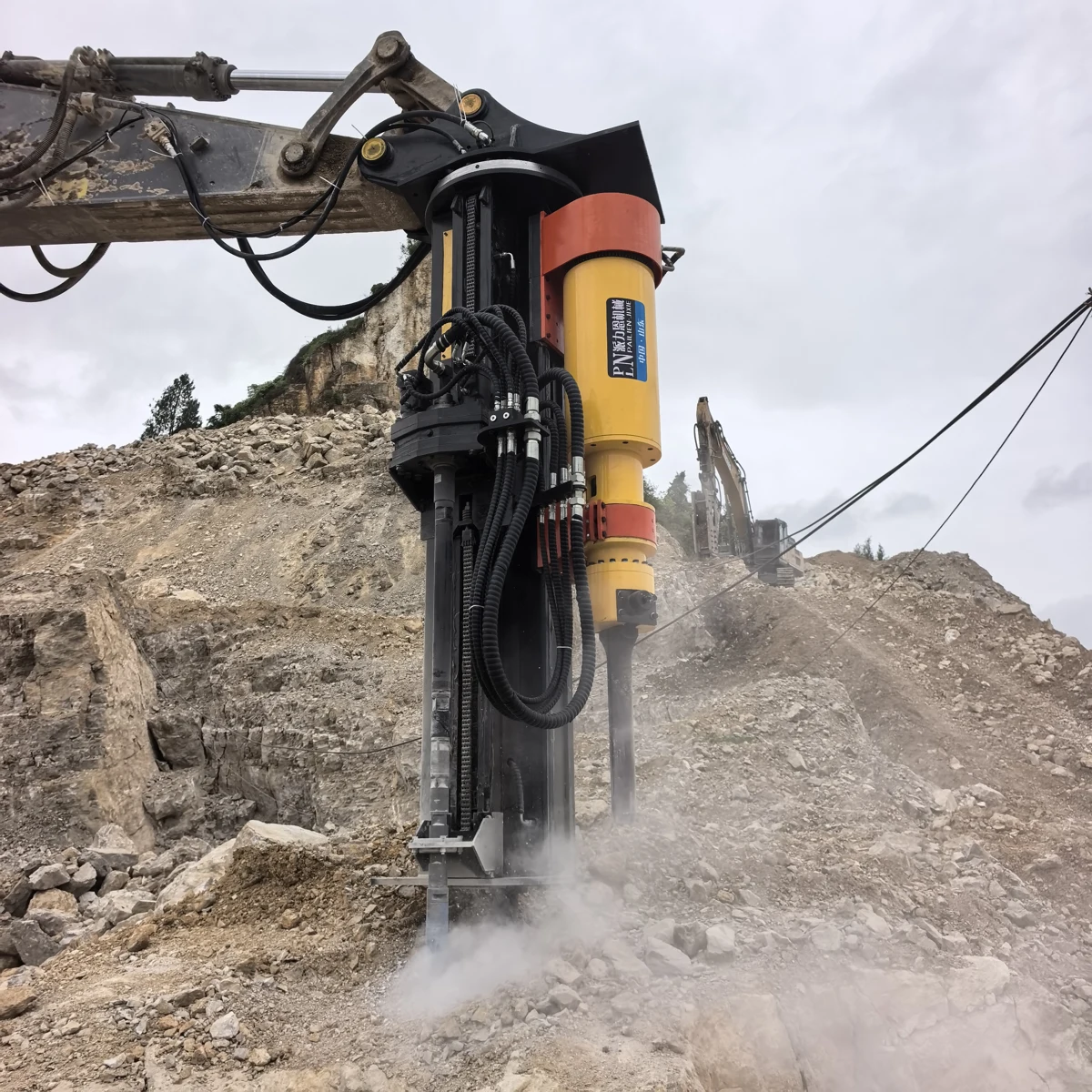
This excavator rock splitter includes a drill for preparing boreholes on the same carrier. The operator positions the attachment at the rock face. The drilling unit makes the borehole, and the operator then aligns the splitting tool with that hole. The hydraulic wedge assembly applies lateral force to the bore wall. When the rock separates, the crew clears the pieces so the next section can be reached.
Drill the borehole
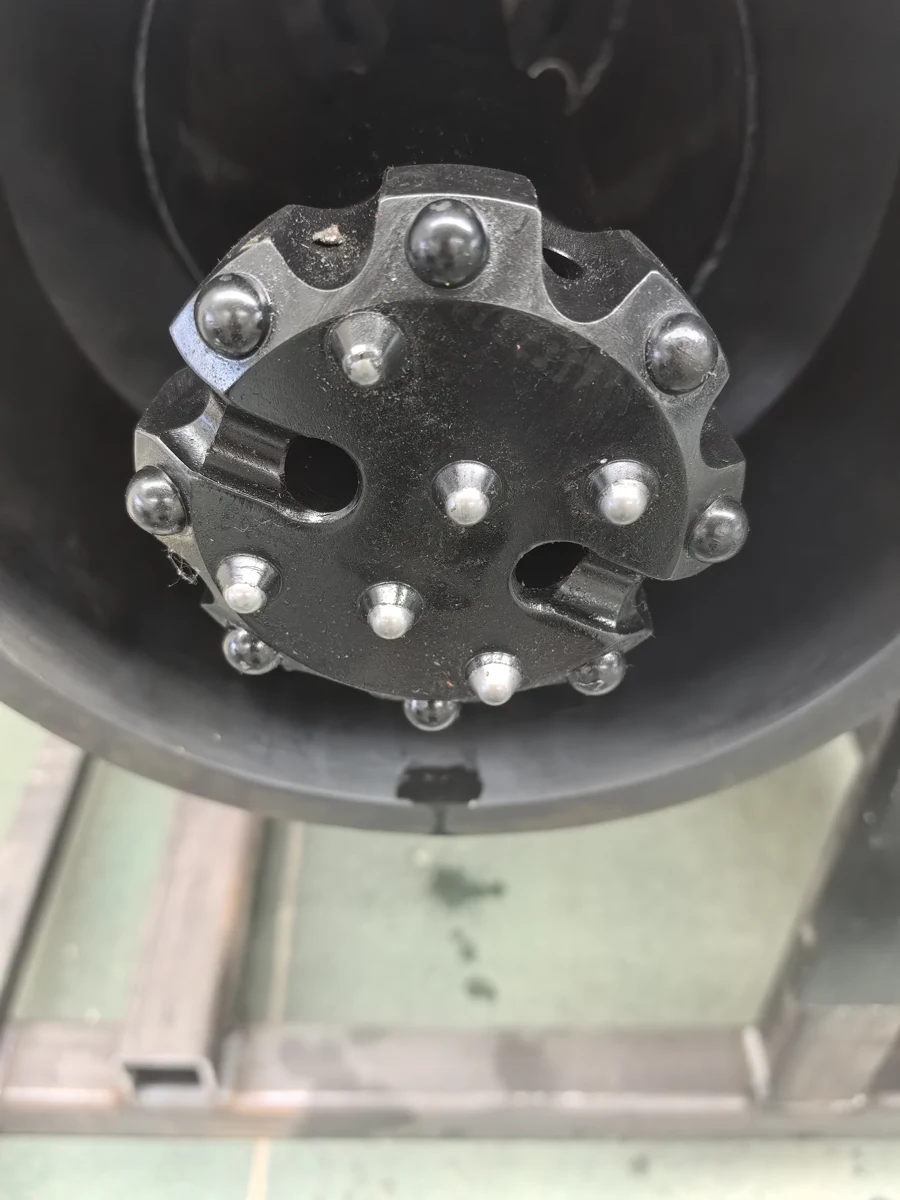
Select the drill tooling for the quoted bore diameter and the rock at your site. Record drilling time separately during a trial, since harder or more fractured material can affect the time needed to prepare each hole.
Align the splitting tool
Both tools are carried on the same attachment, so the same excavator can carry out the drilling and splitting stages. Allow enough space to reposition the assembly and align the splitting tool with the hole.
Separate and clear the rock
An exposed face gives the rock space to move as a crack develops. Once the section separates, the resulting block size and available loader access determine how quickly the crew can clear it.
Applications for non-blasting rock excavation
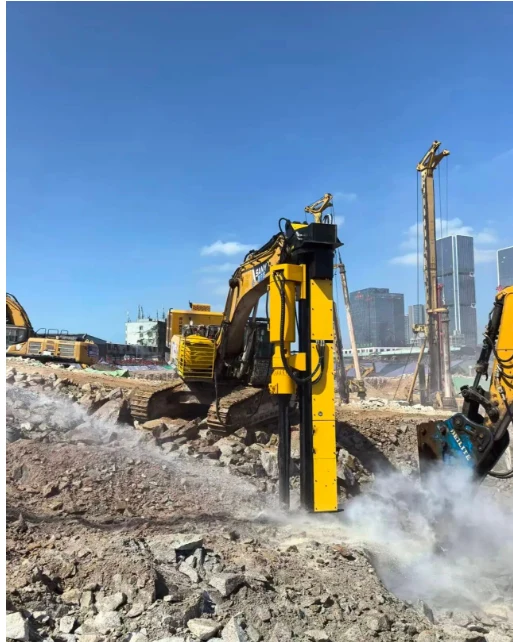
Quarries and bench development
Consider the combined attachment when a crew repeatedly drills and splits along an accessible bench. Evaluate the exposed face, existing joints, and the size of blocks that need to be moved or sent for further processing.
Road cuts and rock slopes
Confirm that the excavator has room to set up and that the attachment can reach the planned hole positions. Compare the working angle and available clearance at the upper and lower ends of the cut, where the carrier may need a different position.
Foundation excavation and site preparation
Plan how the excavator, loader, and any support equipment will share the work area. A machine that can reach the hole still needs space to move the splitting tool into place and to leave a route for fragment removal.
Projects with blasting restrictions
The attachment separates rock using hydraulic force, without explosives. For work near structures, assess drilling noise and vibration, excavator access, and the movement of separated rock as part of the project plan.
Confirm carrier fit and measure the full cycle
Carrier tonnage helps narrow the selection. To confirm fit, share the exact excavator make and model, boom and stick configuration, mounting interface, auxiliary circuit specifications, and the reach required at the face. We can review the proposed attachment against these details before you order.
Check the planned working position
Compare the attachment mass and dimensions with the carrier’s rated capacity at the required reach and orientation. Include the coupler and other installed equipment in the review. Check how hoses will route through the working range and where the compressor will sit if you select a pneumatic drill.
Evaluate a representative trial
Time the complete sequence from setting up at the face through drilling, alignment, splitting, and clearing. Record the volume removed and note any secondary breaking. Use those measurements to compare configurations in similar rock and estimate how much the crew can complete in a shift.
When an integrated attachment makes sense
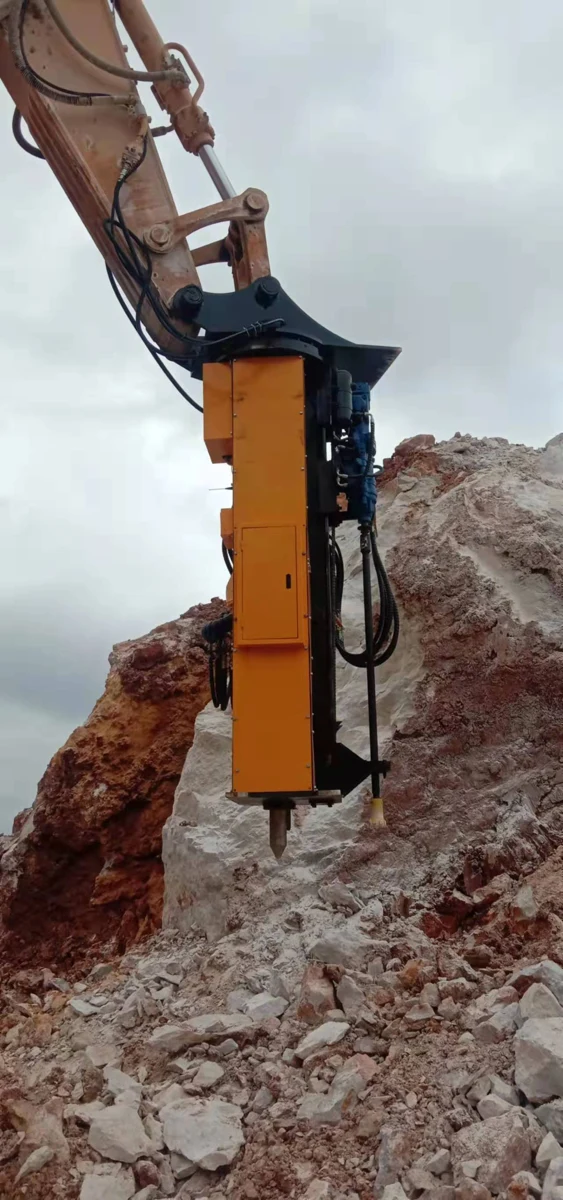
Compare the layout of the job with the way you intend to use the carrier. An integrated machine can be practical when the same excavator will drill and split a series of holes at one face. Where the crew can drill ahead in a different area while splitting continues elsewhere, compare the schedules and equipment requirements for both approaches before deciding.
Compare how equipment moves between holes
On a bench with recurring hole positions, record how often each machine needs to move and how much time is spent aligning the tools. If the carrier has to reposition after drilling to reach the hole with the splitter, include that movement in the trial. The time saved by combining tools depends on the access and the work sequence.
Keep support equipment in the plan
The combined attachment still needs a carrier and a way to remove the separated rock. A pneumatic drill also needs an air compressor and a route for the air line. Include the space needed for support equipment and the time needed to move it, especially when several sections of the site will be worked in succession.
What to include in your inquiry
Tell us the project type, rock conditions, planned bore diameter and depth, and the size of pieces you need to remove. Send site photos or a sketch showing the work face, available setup space, and access for loading. If the machine will work at several sites, describe the most restrictive location as well as the typical one.
Excavator and mounting details
Share the carrier model, attachment interface or coupler, available auxiliary flow and pressure, and required reach. If the excavator has multiple auxiliary circuits, include their specifications and the control arrangement.
Power and supply requirements
For a pneumatic version, include the compressor details and expected distance between the compressor and attachment. We will review the drilling and splitting power requirements and list the proposed equipment, tooling, and accessories in your quote.
Drill and split machine FAQ
Does the attachment require a separate drill?
The attachment carries its own drilling unit and hydraulic splitting tool. A pneumatic version also needs a compatible compressor to power the drill.
Do both PLE-200 versions drill to the same depth?
The listed drilling depth is 2,000 mm for the fully hydraulic version and 1,700 mm for the pneumatic version. Both have a listed bore diameter range of 90–115 mm. We will confirm the tooling and depth for your selected configuration.
Can I choose a model using excavator weight alone?
Use the listed weight class for initial screening. We also need the carrier model, lifting capacity at the planned reach, mounting details, and auxiliary hydraulic specifications to confirm compatibility.
How should I compare expected productivity?
Run a trial in representative rock. Record the entire cycle and how much rock you can actually clear. Include equipment moves, tool alignment, and any secondary breaking in the comparison.
What comes with the quoted machine?
We itemize the attachment, drilling and splitting tooling, controls, hoses, and any spares included in the quote. The proposal also states which items, such as the excavator or compressor, are supplied separately.
What information helps you check a restricted work area?
Send an overall photo and a sketch showing where the excavator can stand, the height of the face, and any overhead or side obstructions. Include the position of the holes and the route for the loader. We can use those dimensions to review the required reach and working clearance.
Can I use a compressor I already own?
Share the compressor model, air delivery at the working pressure, and the planned air line length. We can check those details against the pneumatic drill configuration. Please also provide the excavator’s auxiliary hydraulic specifications so we can review the splitting circuit separately.
Request a quote for an excavator rock drill and splitter
Send your excavator model, bore requirements, and site photos. We will review the job and recommend a configuration for your work face and carrier.