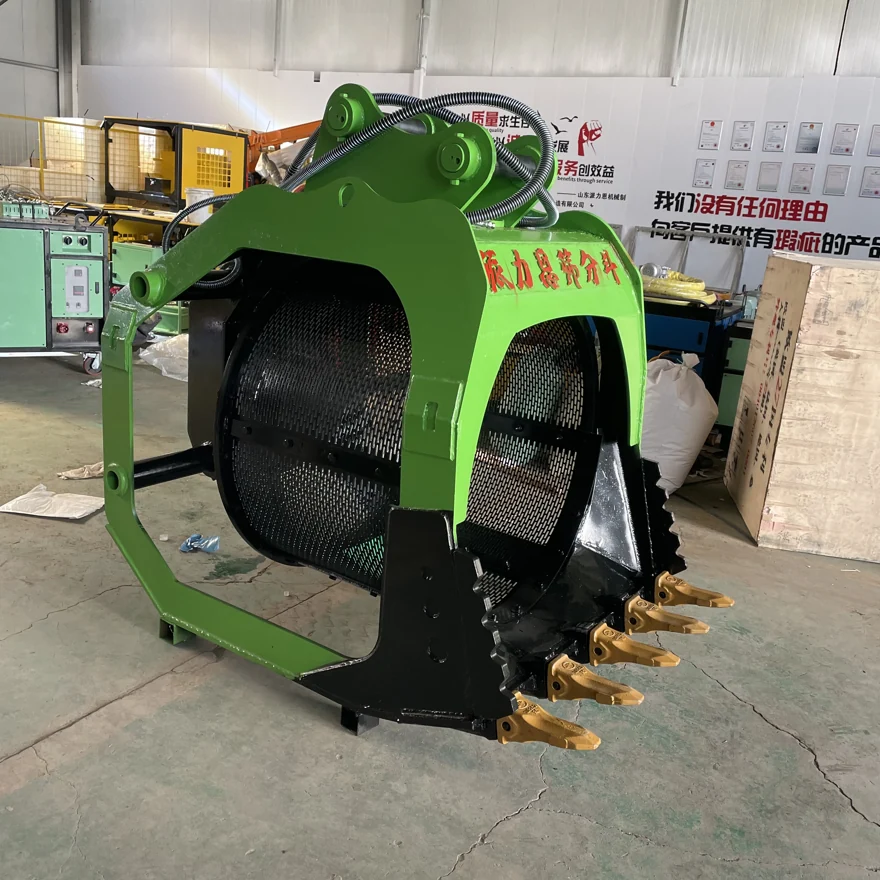
Excavator Screening Buckets
Screen topsoil, gravel, and crushed aggregate on site with a hydraulic rotary drum.
- Recover usable material from mixed stockpiles
- Match the screen opening to your material and target grade
- Run the rotary drum using auxiliary hydraulic power from your excavator
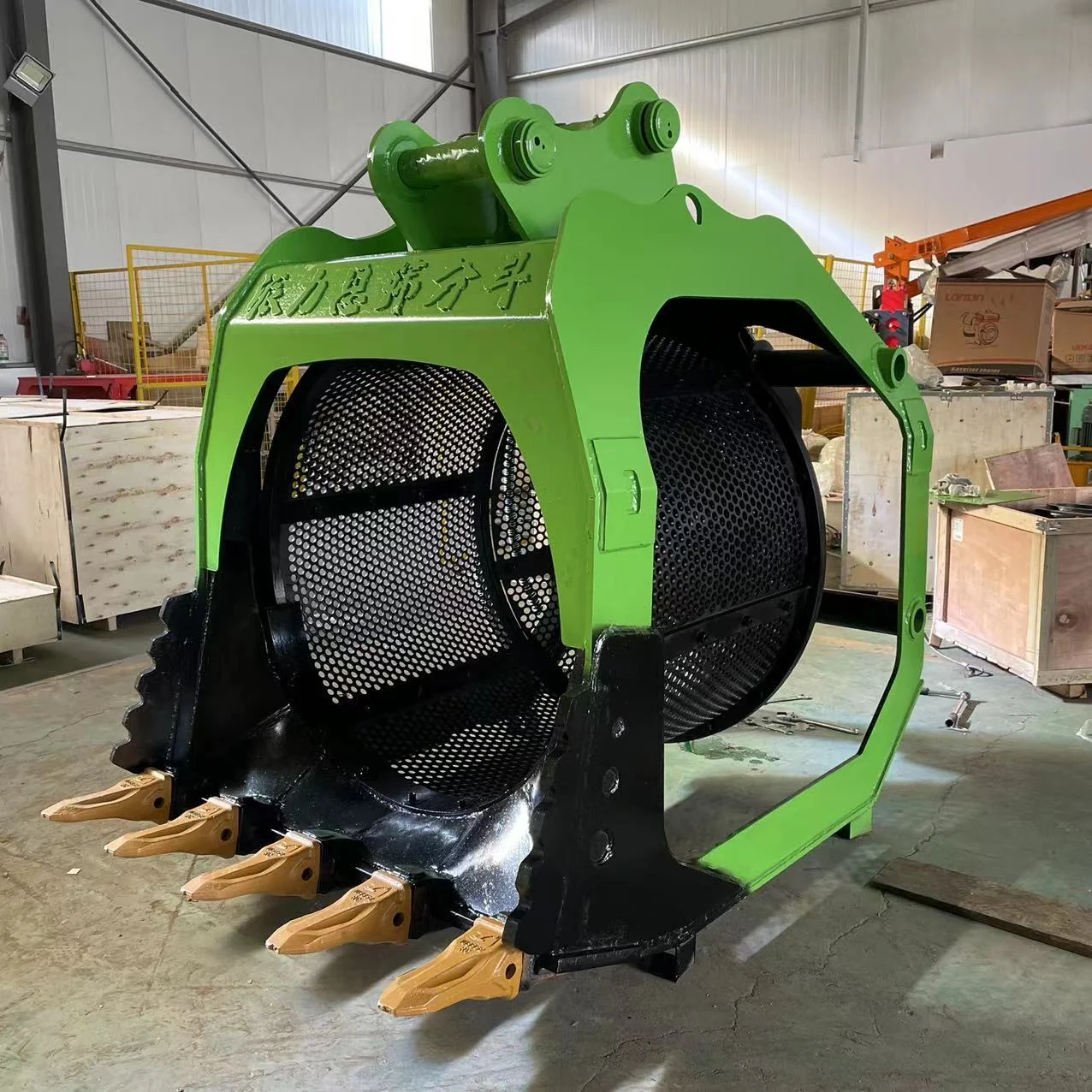
How a rotary screening bucket works
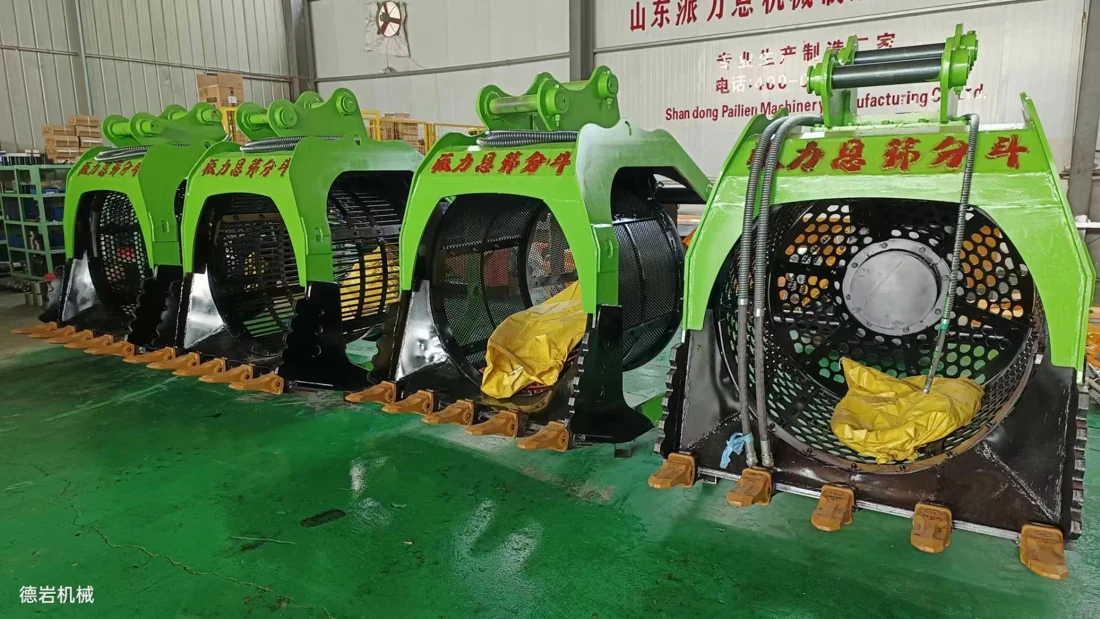
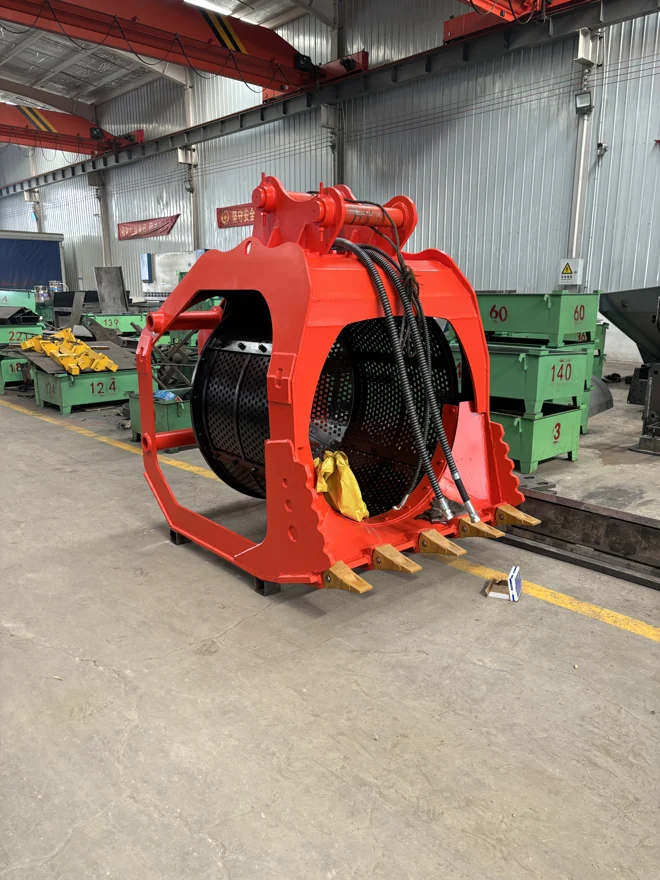
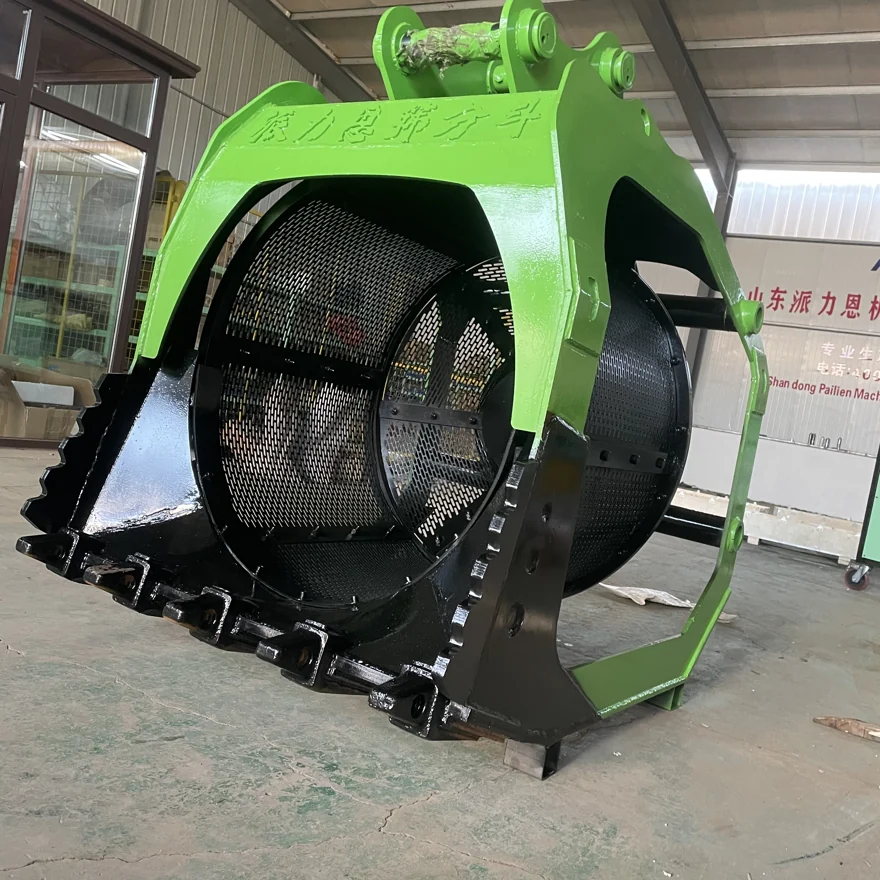
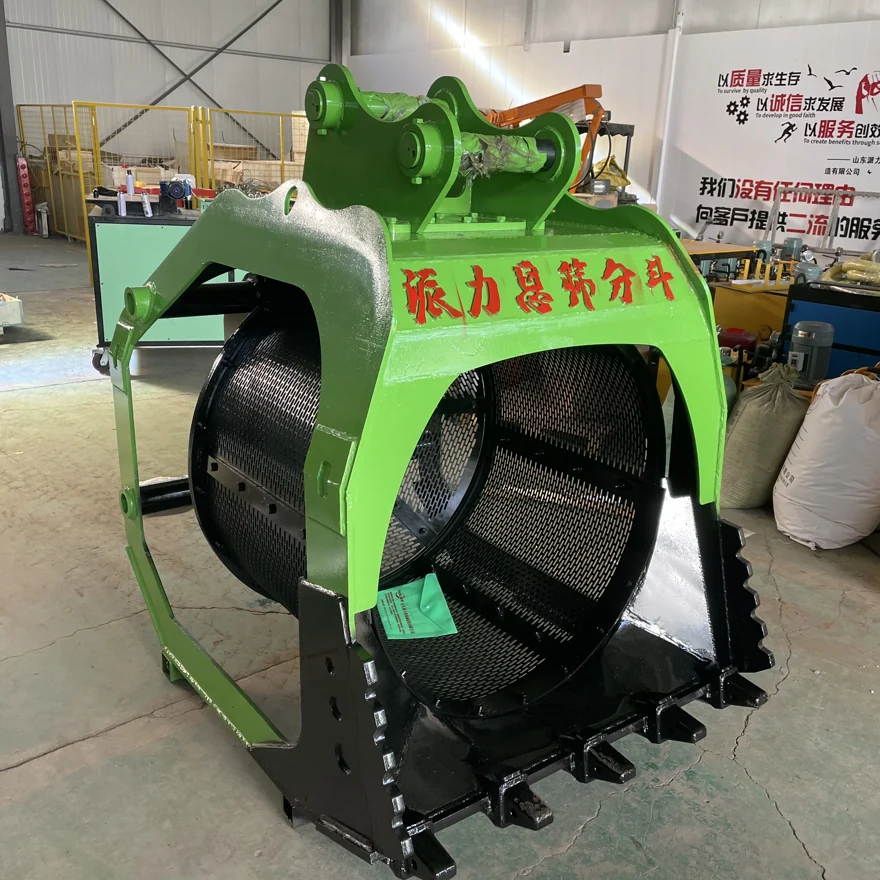
A rotary screening bucket is a hydraulic excavator attachment that separates loose material by size. The auxiliary hydraulic circuit on the excavator supplies oil to the motor that rotates the screening drum. As the load tumbles, smaller particles fall through the openings and oversize pieces are retained in the drum. The operator empties the retained material into a separate pile for removal or further processing.
Keep the fraction you need
For trench backfill, the useful fraction may be the screened soil. At a gravel site, the retained stone may be the product. Plan a destination for each fraction before screening so the two piles stay separate and the crew can load them without moving the same material again.
Size the screen for the end use
Start with the grading requirements for bedding, fill, landscaping soil, or aggregate. A screen opening controls which particles can pass, and shape and moisture affect the actual split. Flat stone can pass edge-on, while fine moist soil may cling together and remain in the drum.
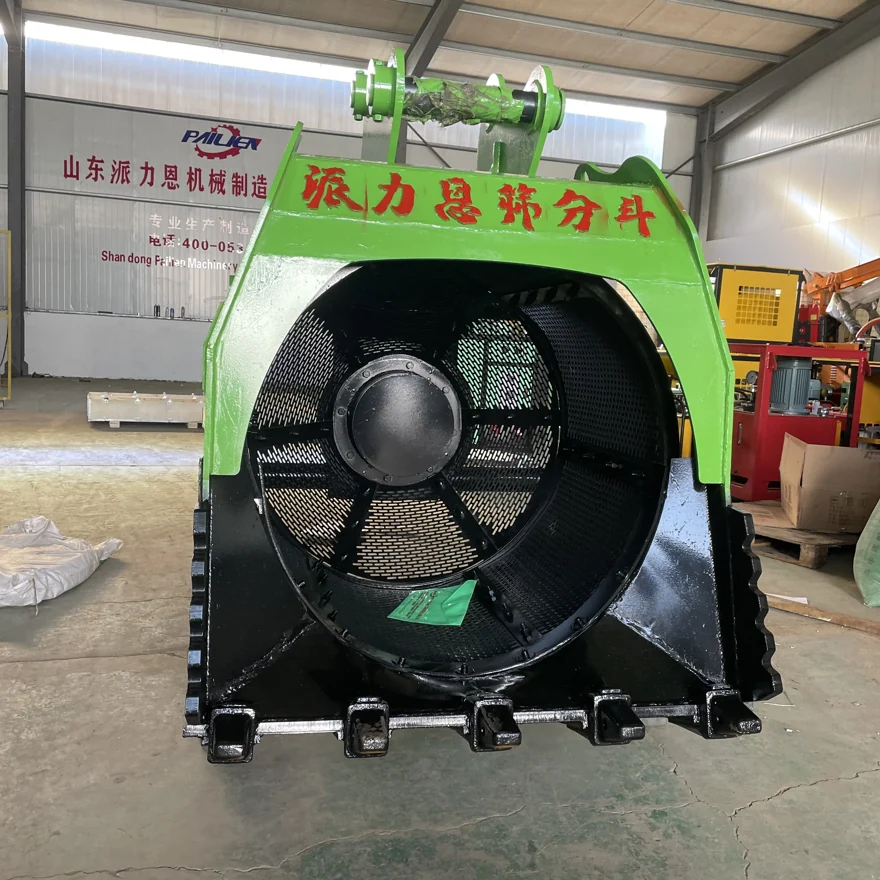
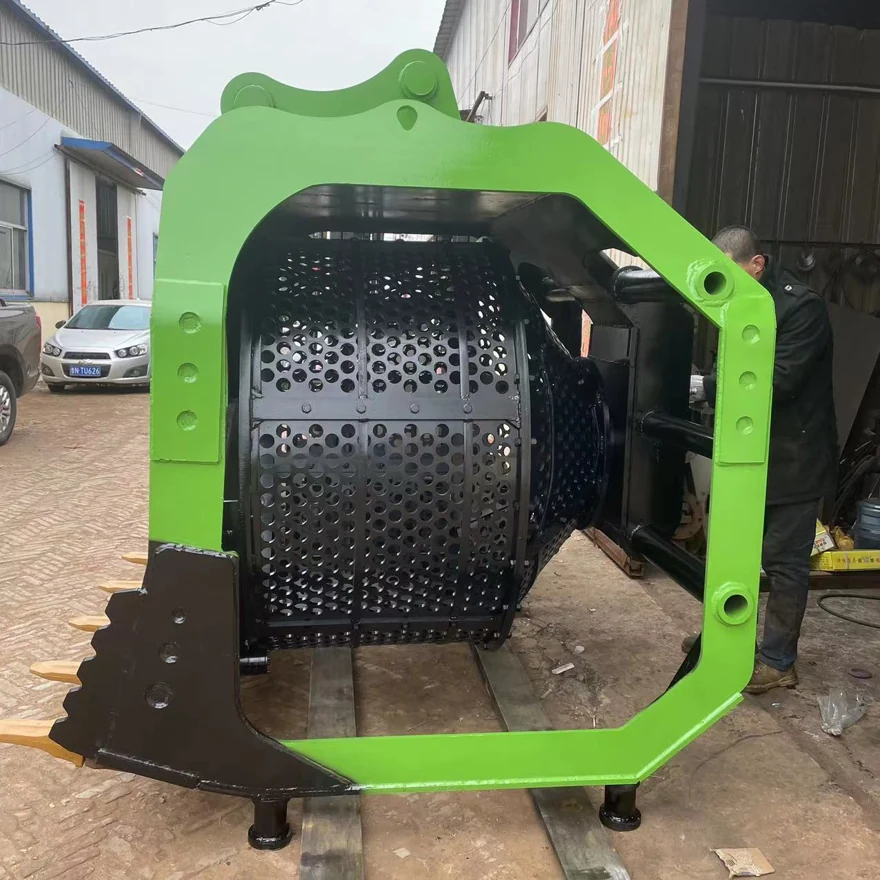
Topsoil, backfill, and aggregate screening
Prepare trench backfill and bedding
Separate large stones from loose excavated material near the trench. Before reusing screened material around a pipe or cable, check the project requirements for the specific bedding or backfill zone. Bedding and general backfill can have different limits for particle size, moisture, and compaction, so plan the two stockpiles separately when the specification calls for it.
Screen topsoil for landscaping
Screen loose soil for landscaping and site reinstatement. This can help remove oversize stones and coarse debris that interfere with spreading. If the feed contains wet clods, coarse roots, or mixed waste, test a representative sample first. You may need to sort large debris or allow the material to dry before screening.
Grade gravel and crushed aggregate
Separate a mixed stockpile into a finer and a coarser fraction for further handling. If the project specifies a grading range, take a representative sample of each fraction for sieve analysis. A second pass with another opening may be needed when the finished aggregate has both an upper and a lower size limit.
Screen recycled aggregate after crushing
Remove visible debris and segregate suspect material before screening suitable crushed concrete, masonry, or rock. Keep fractions as separate lots if the project requires traceability or testing. Screening separates the materials by size. Any required checks for contamination, composition, or suitability still depend on the project specification.
Check screening bucket compatibility
Start with the exact carrier and auxiliary circuit, then confirm the screen opening against your feed. Excavators in the same weight class can have different mounts, hydraulic settings, and capacity at reach. Include the bucket, coupler, and estimated material weight when reviewing the loaded attachment for the intended working position.
| What to check | What to send | What it helps confirm |
|---|---|---|
| Carrier and mount | Excavator make and model, coupler type or pin dimensions, intended reach | Mount fit and loaded capacity at the intended working position |
| Auxiliary hydraulics | Available flow and pressure, return-line details, and any existing case-drain connection | Motor requirements, allowable return pressure, and any case-drain requirement |
| Feed material | Type, moisture, typical and maximum particle size, photos | Feed suitability, potential screen blinding and preparation needs |
| Finished material | Target grade, intended use, volume and schedule | Screen opening, trial criteria and expected work cycle |
Estimate usable output before ordering
For a meaningful estimate, time a complete cycle on representative material. Include loading, screening, emptying the oversize, moving the attachment, and dealing with any blocked openings. Compare the amount that meets your specification with the time spent on the whole cycle.
Test the most difficult material on site
Include wet and dry samples if conditions vary across the site. Wet fines can stick to each other or blind the screen, reducing the open area. A sample taken from only the driest part of a pile can overstate everyday output.
Measure both fractions
Record how much passes and how much stays in the drum. If the project calls for a specific particle-size distribution, have samples checked using an appropriate sieve analysis. Base your reuse estimate on whichever fraction satisfies the project requirements. For trench backfill that may be the screened soil. For a gravel product it may be the retained stone.
Account for wear and handling
Abrasive feed can wear the screen and enlarge its openings, changing the finished particle-size distribution. Include routine inspection, screen cleaning and replacement in the estimate. Check whether the crew can clear the finished piles at the rate the excavator adds material.
Screening and crushing on the same site
A screening bucket separates material by size. A jaw crusher bucket reduces suitable larger pieces. If the feed already includes usable fines, screen it first and send only suitable oversize to the crusher. If the feed is mostly large rubble, crush the prepared material first and screen the result when a defined grade is needed.
A screening bucket is well suited to smaller batches and work spread across several locations. A dedicated screening plant may make more sense when the job requires continuous high-volume production or several finished fractions at the same time. Compare the cost and time of the whole operation, including stockpile handling and reuse or haul-off.
Choose a screen opening for your material
Send the grading specification if you already have one. When the requirement is described as a use, such as general fill or planting soil, confirm the acceptable particle-size limits with the project team before choosing a screen. That gives you a measurable target for the trial and helps avoid running a second pass on material that already meets the requirement.
Balance yield and oversize removal
A smaller opening generally retains more of the feed, including particles that might have been acceptable for the job. An opening that is too large can let through stones you intended to remove. Test candidate openings with the same feed and record how much usable material each produces. If you are ordering screens for several jobs, list each target separately so you can confirm which jobs can share a screen.
Plan for changes across the stockpile
Material from one trench or demolition area can vary from load to load. Keep feed from visibly different layers or sources separate during the trial, especially when one pile contains much more clay or stone. Note which material can be screened directly and which needs sorting or drying. This helps your crew estimate how much material can be reused without delaying excavation or backfilling.
For repeat jobs, ask for the screen assembly reference and expected replacement lead time with the quote. Confirm how wear will be checked and which parts are serviceable on the proposed configuration. If the screen wears enough for larger particles to pass, check the grading again before combining new output with an approved stockpile.
Screening bucket FAQ
Can a rotary screening bucket handle wet topsoil?
It depends on the soil and moisture level. Loose damp material can still separate, while cohesive clay and saturated soil can coat or block openings. Send representative feed photos or video and describe how often these conditions occur.
Can I change the screen size?
Ask which screen assemblies and aperture sizes are available for the proposed configuration. Tell us the sizes you need and how often you expect to switch so we can confirm the changeover arrangement and spare parts.
How do I select an excavator size?
Send the excavator make and model, mount details, auxiliary flow and pressure, and expected working position. PAILIEN can review the proposed attachment and provide its weight and hydraulic requirements for your compatibility check.
What is the hourly throughput of the screening bucket?
Output depends on material, screen aperture, bucket loading and time spent on each cycle. Share your target volume and schedule so the proposed setup can be assessed against the job conditions.
Can screened soil go straight back into a trench?
Use it where the screened material meets the specified grading and other project requirements. Bedding material can have additional limits on rock size, material composition, or compaction that must be verified before placement.
Request a screening bucket quote
Tell us what you need to separate and what you plan to do with the screened material. With the information below, PAILIEN can review the excavator fit and confirm the available screen options for your job.
- Excavator make and model, coupler or pin dimensions, and auxiliary hydraulic specifications
- Material type, moisture, largest pieces, and photos of the stockpile
- Target grade or screen opening, intended use, and volume to process