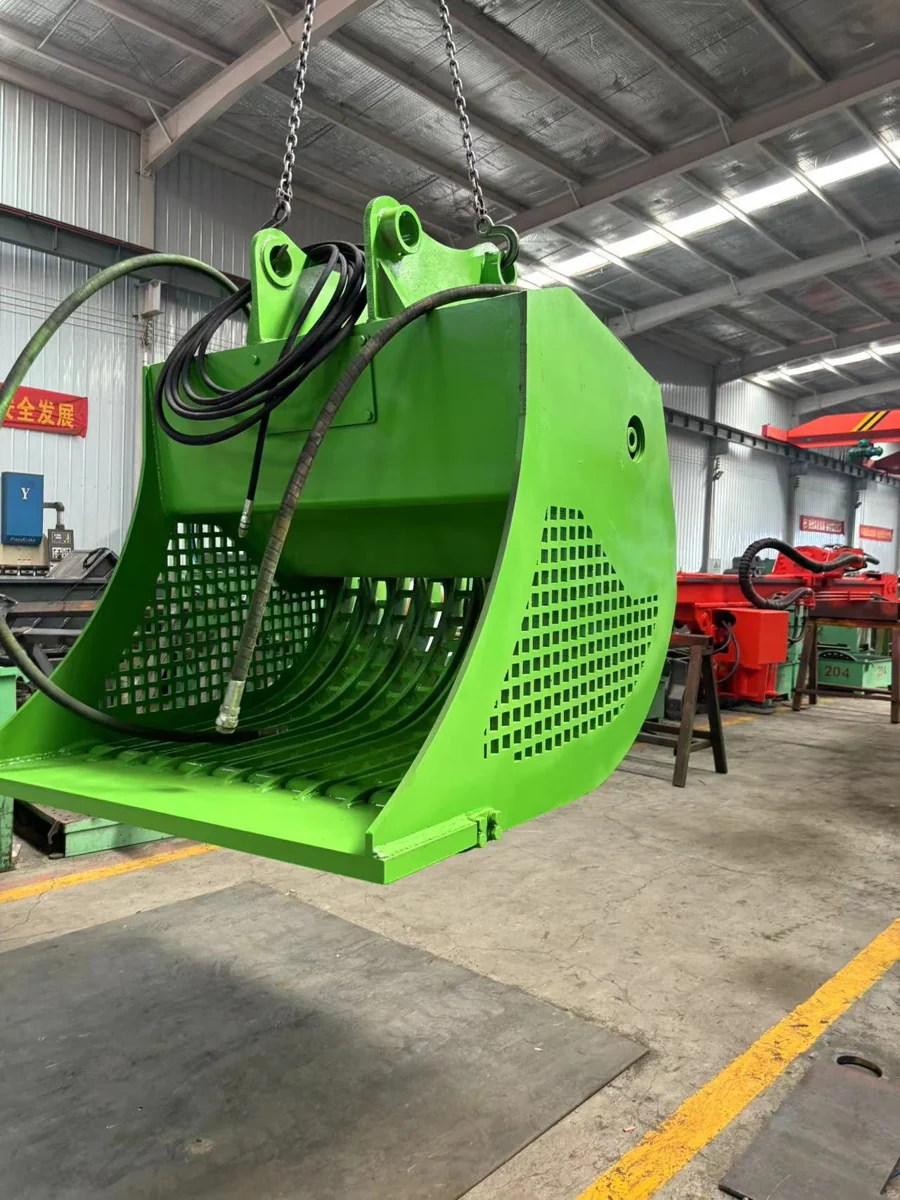
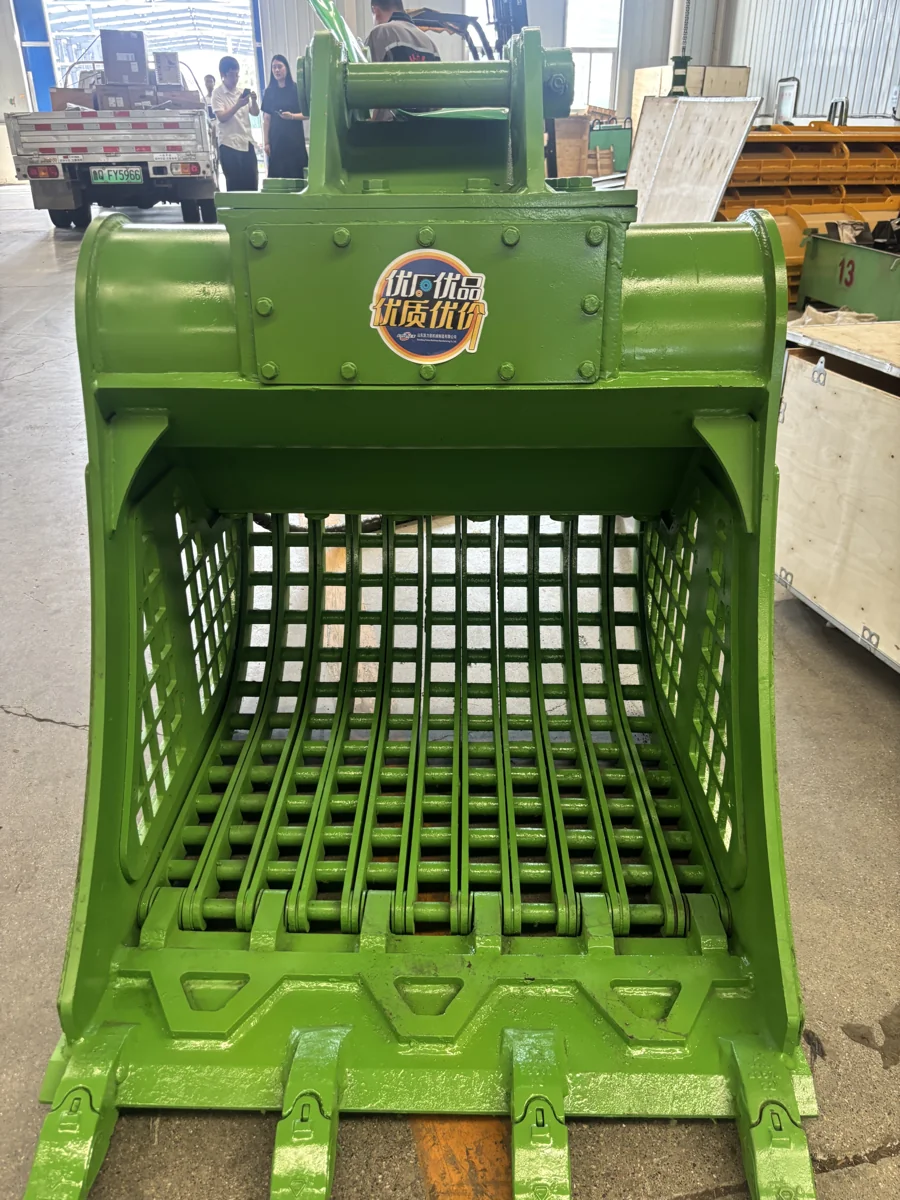
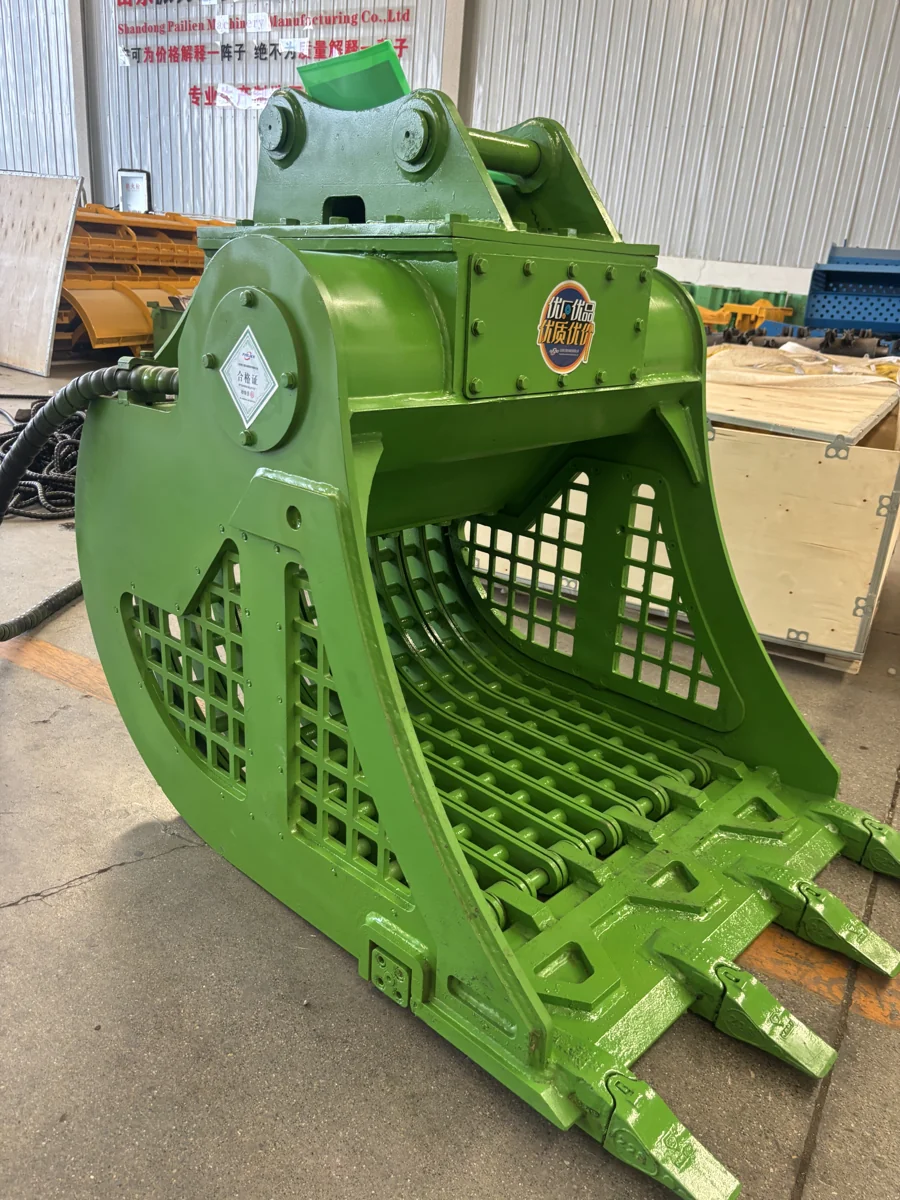
Excavator Vibrating Screening Bucket
Separate usable soil and aggregate close to the work area.
- Hydraulic vibration moves material across the screening surface
- Separate fines from oversize stones and debris
- Prepare material for approved backfill, landscaping, and aggregate reuse
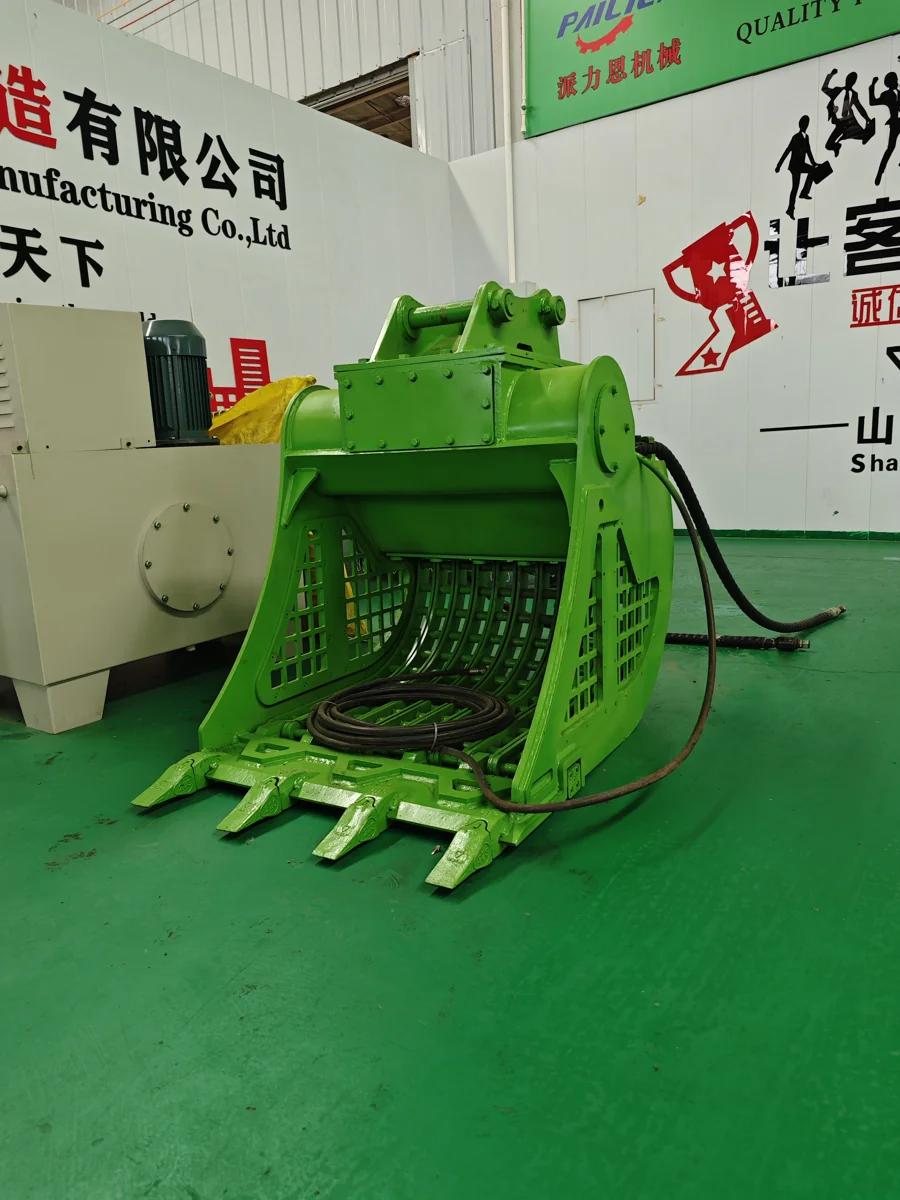
How a vibrating screening bucket works
A vibrating screening bucket uses the excavator’s auxiliary hydraulic circuit to drive a vibration mechanism. Movement of the screening surface helps loosen and distribute the feed, allowing particles small enough to pass through the openings to fall below the bucket. Oversize material remains inside for separate discharge. The excavator can move between stockpiles and work areas as the job progresses.
Recover the fraction your project needs
For a backfill job, the useful product may be the finer soil that passes through the screen. At a gravel stockpile, the retained stone may be the fraction you want. Set up separate areas for both products before starting so they stay apart and can be loaded efficiently.
Confirm the screening configuration
Send the required particle-size range and describe the material you plan to process. Screen opening, feed shape, moisture, and loading all affect the result. Confirm the screen construction and available opening sizes for the proposed attachment, then check representative output against the specification for its intended use.
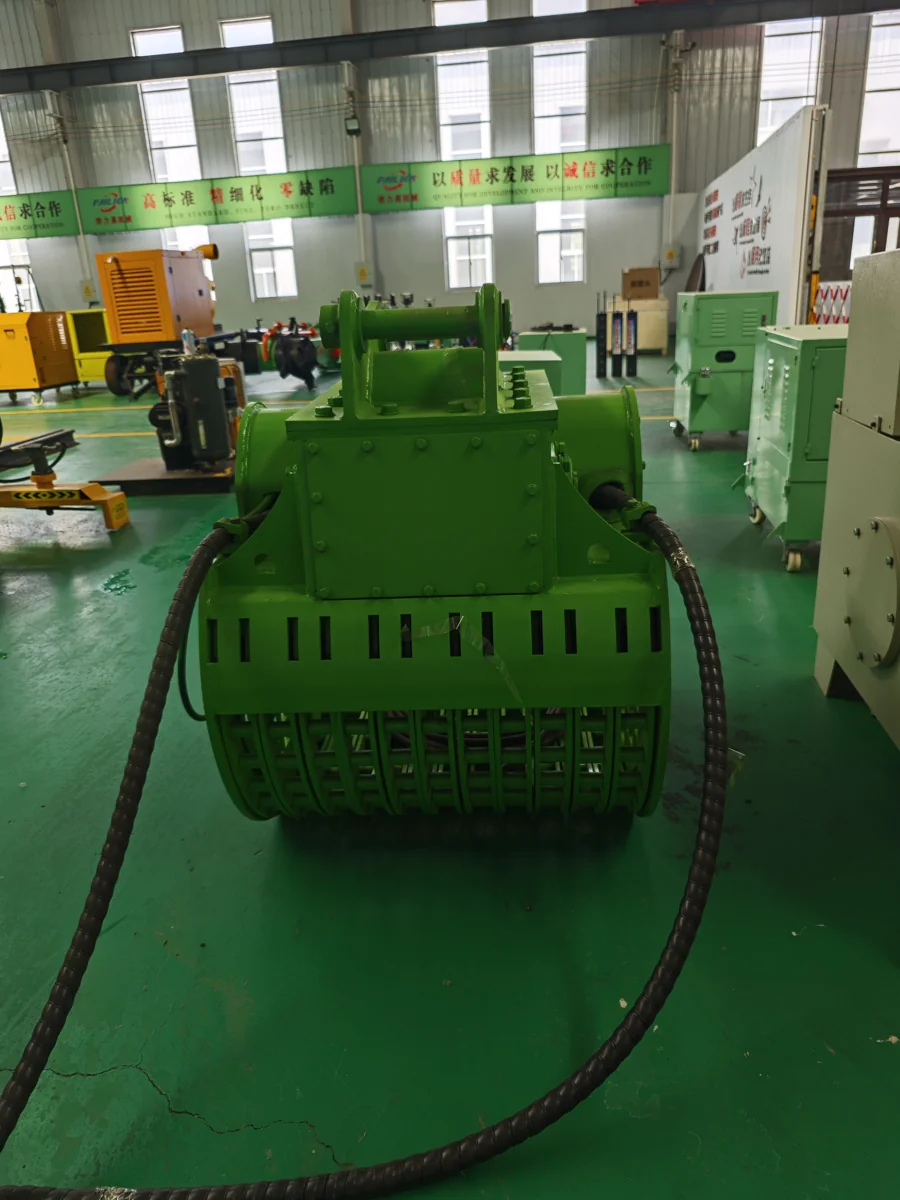
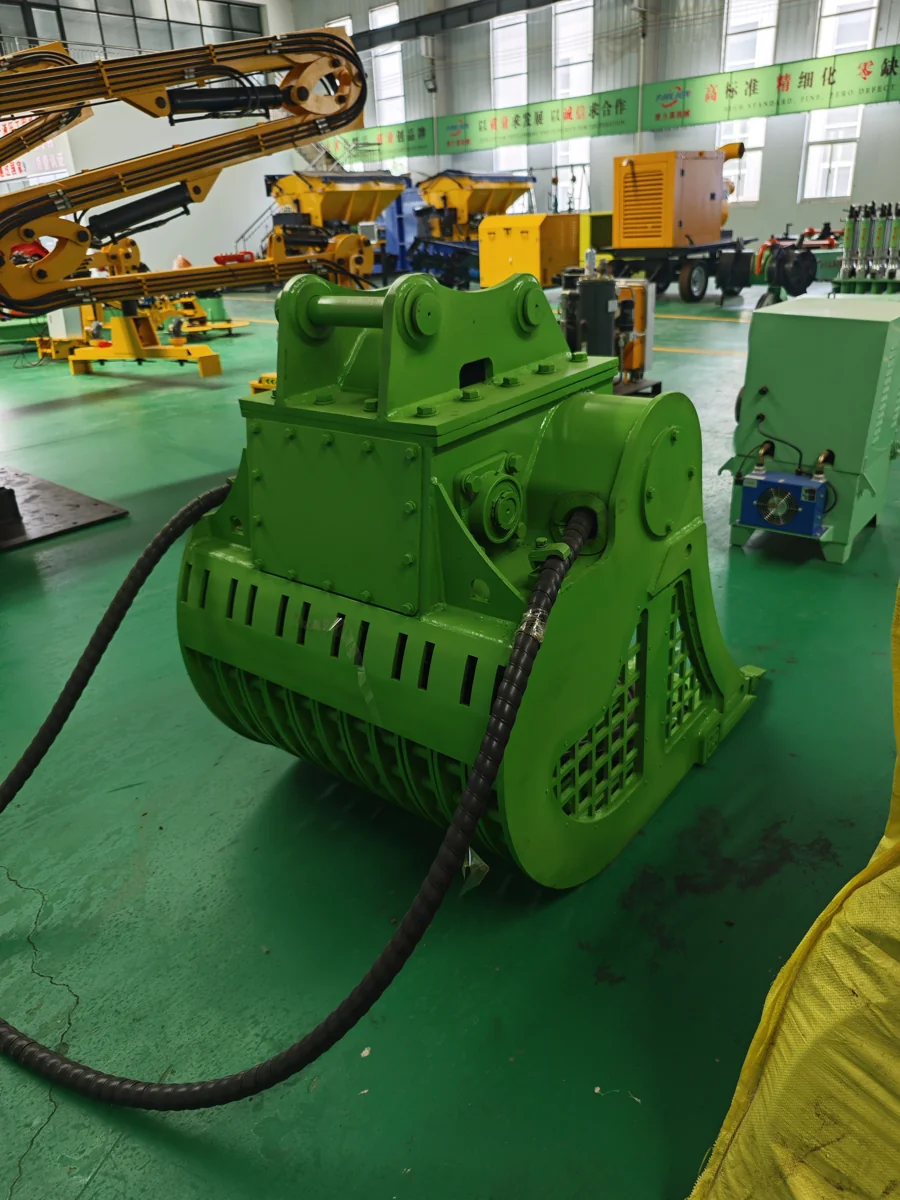
Soil and aggregate screening on site
Prepare trench backfill
Separate larger stones from suitable excavated soil near the trench. Reuse can reduce the quantity sent off site and the amount of replacement fill brought in. Check each backfill zone against the project requirements. Bedding around a pipe may have stricter limits on particle size and composition than general fill above it.
Screen topsoil for landscaping
Remove oversize stones and coarse debris from loose topsoil before spreading it. Assess soil moisture and the amount of clay, roots, and vegetation first. Sticky clods may remain on the screen or block openings. A material trial helps establish whether the feed needs sorting, drying, or another preparation step.
Grade recycled aggregate
Screen suitable crushed concrete, masonry, or rock after the feed has been sorted. Keep each source or batch separate where testing and traceability are required. Check the output with a sieve analysis if the project specifies a grading envelope. Particle-size separation supports reuse when the material also meets the applicable composition and quality requirements.
Separate gravel from mixed excavation
Process appropriate loose soil and gravel close to the excavation, with separate stockpiles for passing material and retained stones. If the feed varies across the site, test samples from each main layer. This helps estimate the amount of usable material and shows where pre-sorting may improve the work cycle.
Match the attachment to your excavator
Start with the exact excavator make and model. Check the mounting interface, auxiliary hydraulic circuit, and loaded attachment capacity at the planned working reach. Include the bucket, coupler, and estimated material weight in the load calculation. PAILIEN can review the details below against the proposed configuration and provide the attachment specifications needed for your compatibility check.
| Selection point | Information to provide | What to confirm |
|---|---|---|
| Excavator and mount | Make, model, coupler type or pin dimensions, and intended reach | Mounting fit and loaded capacity at the work position |
| Hydraulic supply | Available auxiliary flow and pressure, return line details, and any existing case drain | Motor requirements, return pressure limits, and plumbing |
| Material | Soil or aggregate type, moisture, clay content, maximum pieces, and photos | Feed suitability and preparation or trial requirements |
| Output | Target grade, intended use, quantity, and production schedule | Screen selection and acceptance criteria |
Choose the screening method for your feed
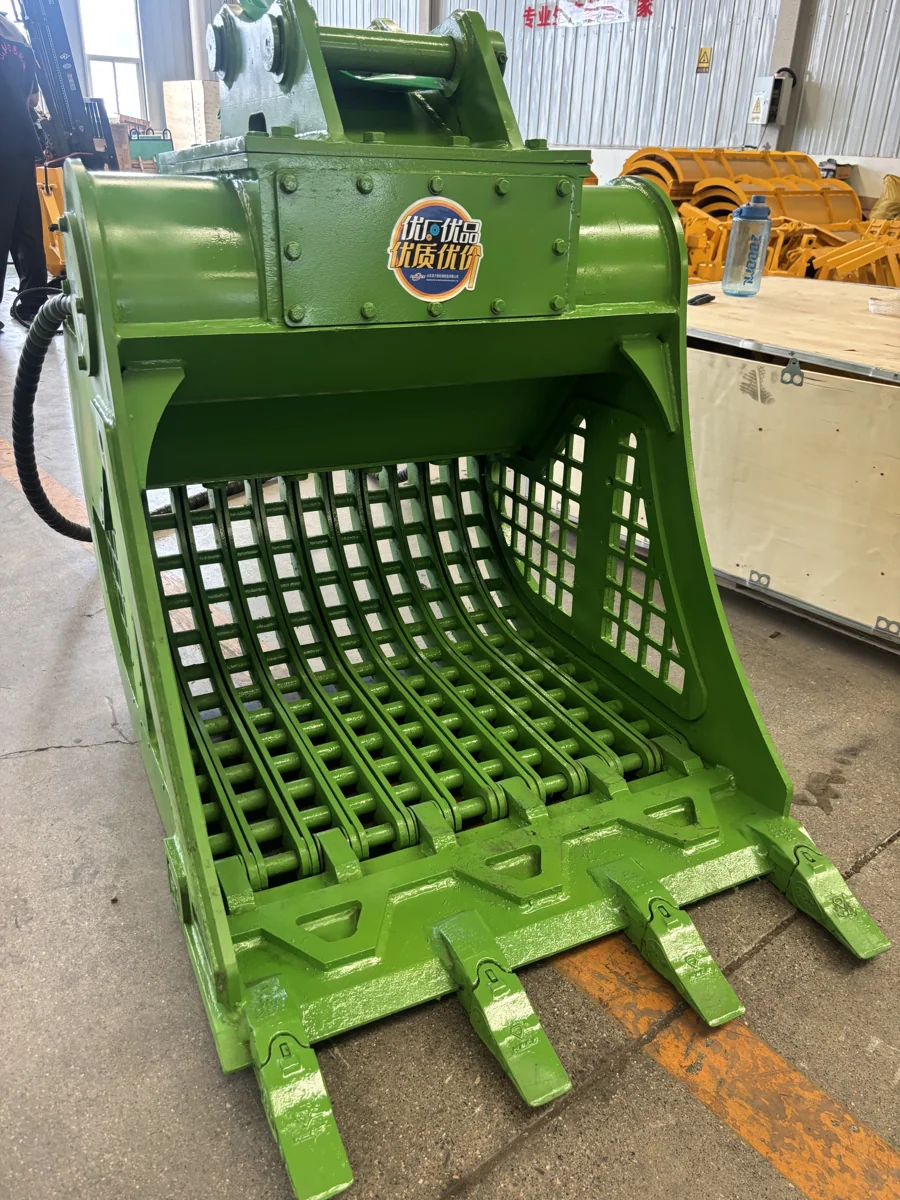
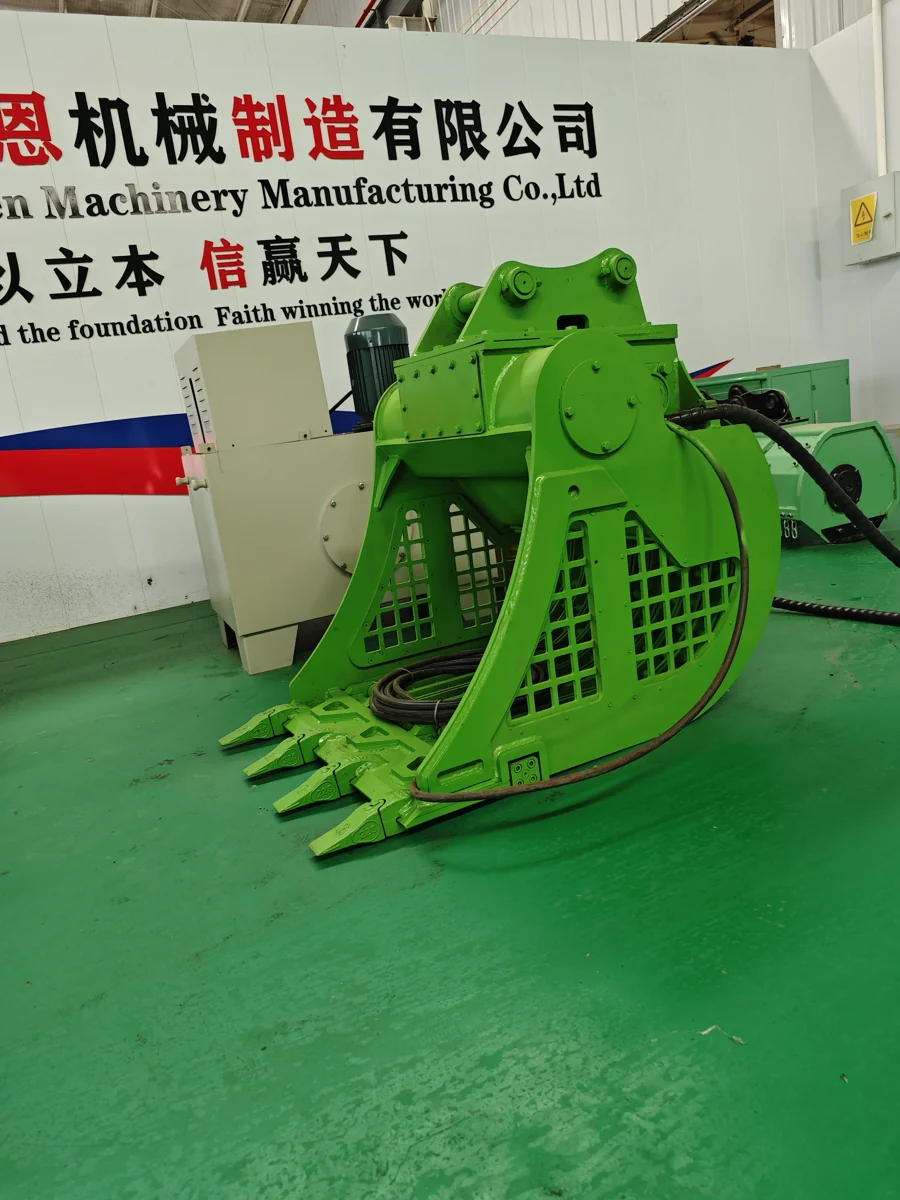
Vibrating screening bucket
Vibration moves and distributes material on a screening surface. Assess the screen opening and motion against the feed, especially when moisture and fine particles affect separation. Confirm the vibration mechanism and operating settings for the selected model.
Rotary screening bucket
A rotary screening bucket tumbles material in a rotating drum. It separates existing particle sizes in loose soil, gravel, and crushed aggregate. Compare trial results using the same material and target grade.
Screening crusher bucket
A screening crusher bucket uses cutter shafts to loosen suitable soft clods during processing. Consider this configuration when breaking up clods or blending materials forms part of the job.
Check wet material with a trial
Moisture can make fine particles stick together or adhere to the screening surface. The result depends on clay content, moisture level, opening size, and how much material is loaded. Test the actual feed under the conditions expected on site. Include wetter samples if rain or excavation below the water table is likely to change the stockpile.
Record the amount passing through, the retained material, and any time needed to clear blocked openings. Inspect the finished material for the intended grading and other project requirements. For strongly cohesive clay or saturated sludge, use the trial to establish whether preparation or a different processing arrangement is needed.
When comparing screening methods, hold the feed and target grade consistent. Time the entire operation, including loading, screening, emptying retained material, repositioning, and clearing the finished stockpile. Use the quantity that meets the specification to estimate usable output per working hour.
Plan production and routine care
Keep material moving
Arrange the feed and finished piles so the excavator can work without repeatedly crossing the same area. Leave a clear route for the machine that removes the screened material. Allow space for retained oversize and for any batches awaiting test results.
Inspect the screening surface
Check for worn openings, damaged bars or mesh, and loose fasteners as specified in the manual. Wear can change the size of particles that pass through. Recheck the output grade when screen condition changes or a replacement screen is installed.
Monitor hydraulics and vibration
Follow the specified hydraulic settings and inspect hoses and connections. Watch for unusual noise, excessive movement, leaks, and rising oil temperature. Confirm the inspection and lubrication requirements for the vibration mechanism, bearings, and isolation components on the selected model.
Confirm cleaning and spare parts
Ask which cleaning procedure is approved for the attachment and whether the configuration supports any assisted clearing function. Confirm screen references, service parts, and replacement lead times before scheduling repeat jobs. Isolate the equipment as instructed before inspecting or clearing it.
Turn your output requirement into a trial plan
Start with a written description of the finished material. If the project specifies both an upper and a lower particle-size limit, a single screen opening may produce only part of the required grading. Confirm whether a second screening step is needed and which fraction will be used after each pass.
Take samples from the main material sources rather than selecting only the easiest feed. Record the source, approximate moisture condition, largest pieces, and visible debris. During the trial, keep the passing and retained fractions separate. This makes it easier to check the result and estimate how much of the incoming material can be reused.
Agree on the acceptance criteria before testing. For backfill, that may include grading, compaction properties, and composition. For landscaping, spreading characteristics and the amount of coarse debris may also matter. Discuss which checks the project team requires and how samples will be collected.
Keep the trial record with your equipment inquiry. Include the tested screen opening, excavator settings, full cycle time, and quantity meeting the acceptance criteria. PAILIEN can use that information to review the proposed configuration and identify any differences between the trial conditions and your planned production work.
Vibrating screening bucket FAQ
Can it process wet soil?
Suitability depends on moisture, clay content, and the required grade. Send representative photos or video and describe the wettest conditions you expect. A trial can establish separation and cleaning needs.
What screen sizes are available?
Share your required grading range so PAILIEN can confirm available screens for the proposed configuration. The final choice should be checked against representative feed and the intended use.
Can it process large rock or concrete blocks?
Prepare the feed within the attachment’s specified limits. If large suitable blocks need size reduction, review a jaw crusher bucket or another crushing step before screening.
How much material can it screen per hour?
Throughput varies with the feed, screen, loading, and complete work cycle. Provide the daily quantity and available hours so the setup can be assessed using relevant trial data.
Can screened soil be reused immediately?
Use screened material where it meets the project’s grading, composition, moisture, and other acceptance requirements. Confirm the requirements for the specific backfill or landscaping application before placement.
Request a vibrating screening bucket quote
Tell us what material you need to separate and how you plan to use the finished product. PAILIEN can review carrier compatibility and the screening options for your application.
- Excavator make and model, mounting dimensions, and auxiliary hydraulic specifications
- Material type, moisture, maximum piece size, and stockpile photos
- Target grade, intended use, total quantity, and production schedule