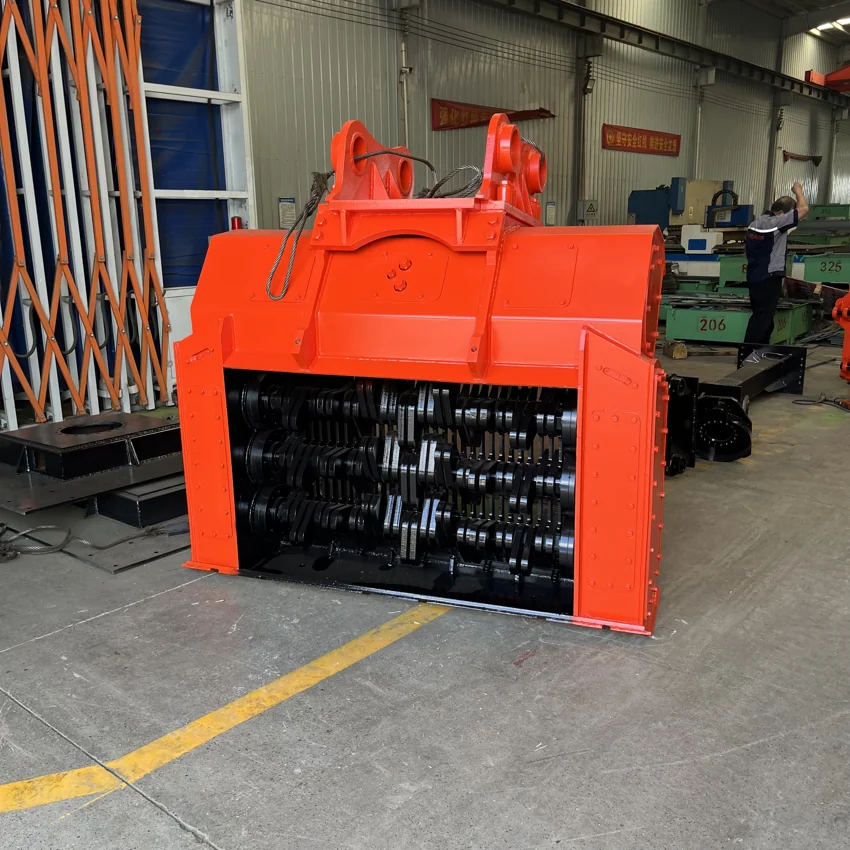
Excavator Screening Crusher Bucket
Break up soft clods and screen excavated material in the same operation.
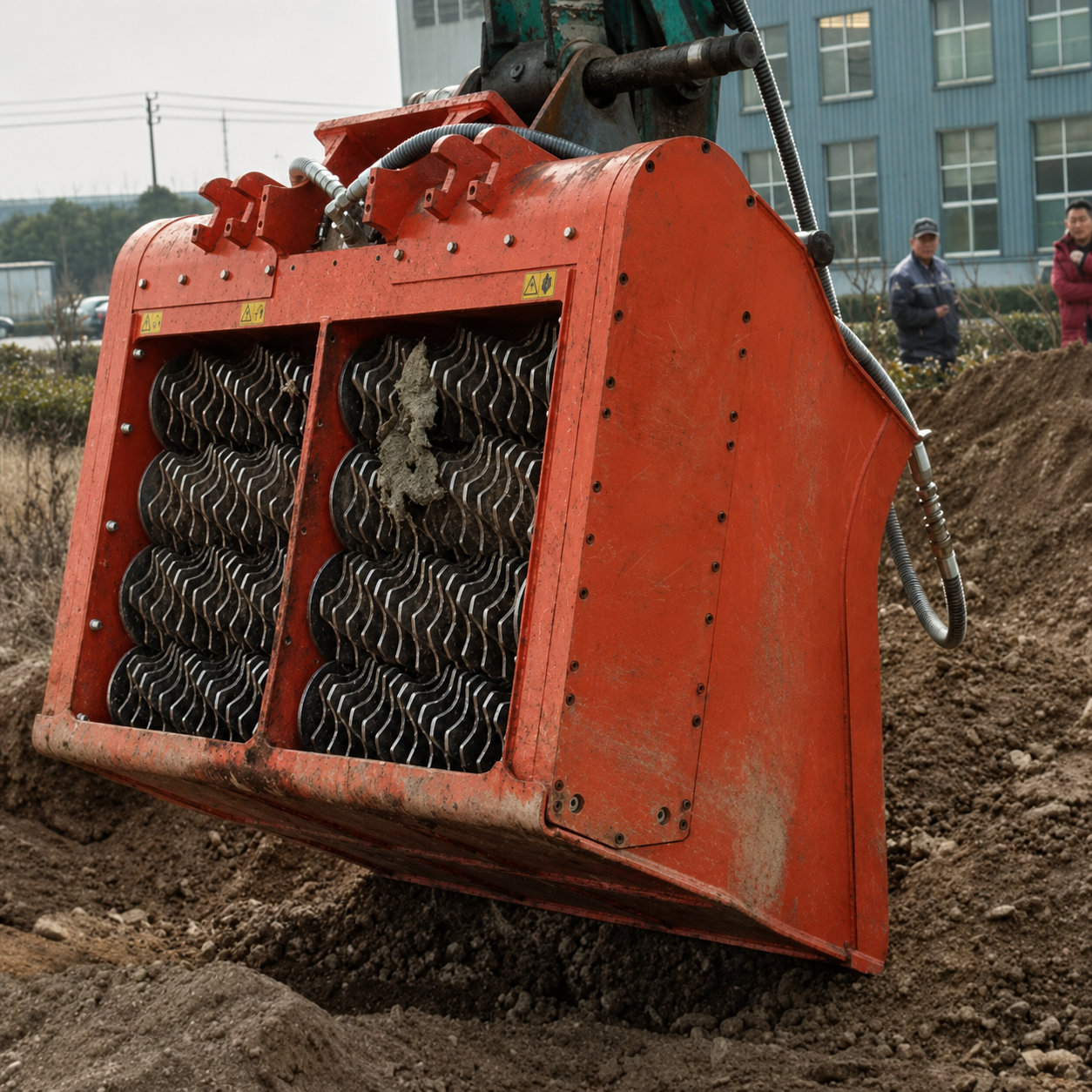
- Break up compacted soil clods with hydraulic cutter shafts
- Screen excavated material where you work
- Blend soil amendments for jobs that call for mixing
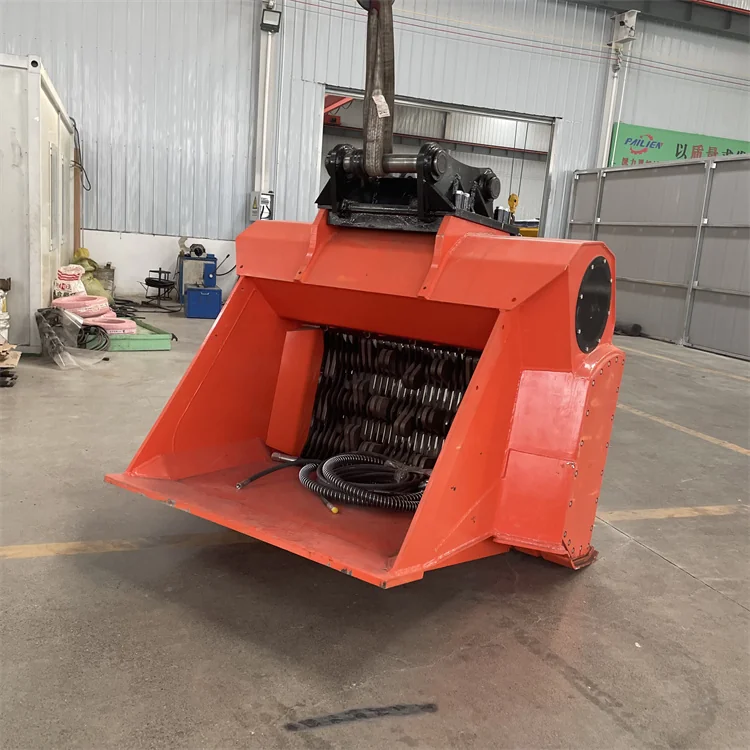
How a screener crusher bucket works
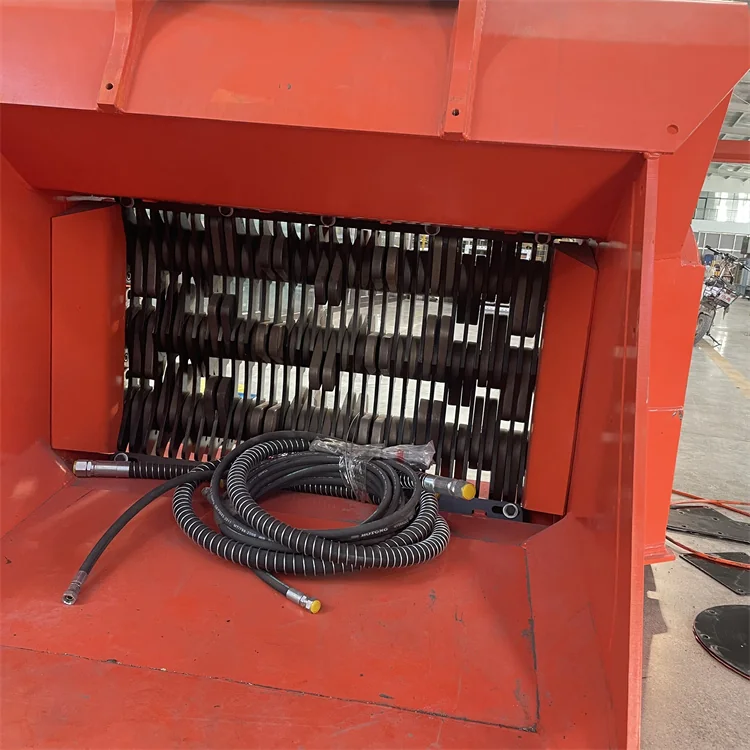
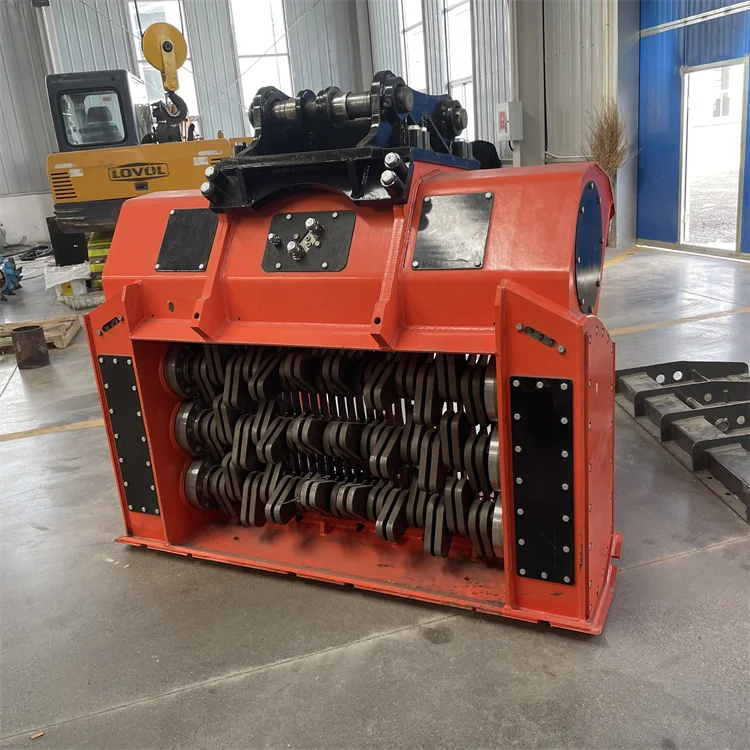
A screening crusher bucket is a hydraulic excavator attachment for processing loose feed that contains breakable lumps. The excavator’s auxiliary hydraulic circuit drives rotating cutter shafts in the bucket. As the shafts turn, they shear and loosen soft clods while moving the material across the gaps between the cutters. Particles small enough to pass through the gaps fall below the bucket. Retained oversize stays in the bucket for separate discharge.
Free usable soil from compacted lumps
Loose fines may pass through quickly, while larger clods need time to break apart. Feed that contains a mix of clay clods and stones can give different results from load to load. The aim is to release usable soil from the clods and retain oversize stones. Check the processed material against the required grade.
Match the cutter setup to the job
Ask which cutter assemblies and nominal gaps are available for the proposed bucket. Gap size influences what can pass, while particle shape, moisture, and the way clods break apart also affect the finished grade. If you need to meet a grading specification, use representative feed to check the result before committing to a configuration.
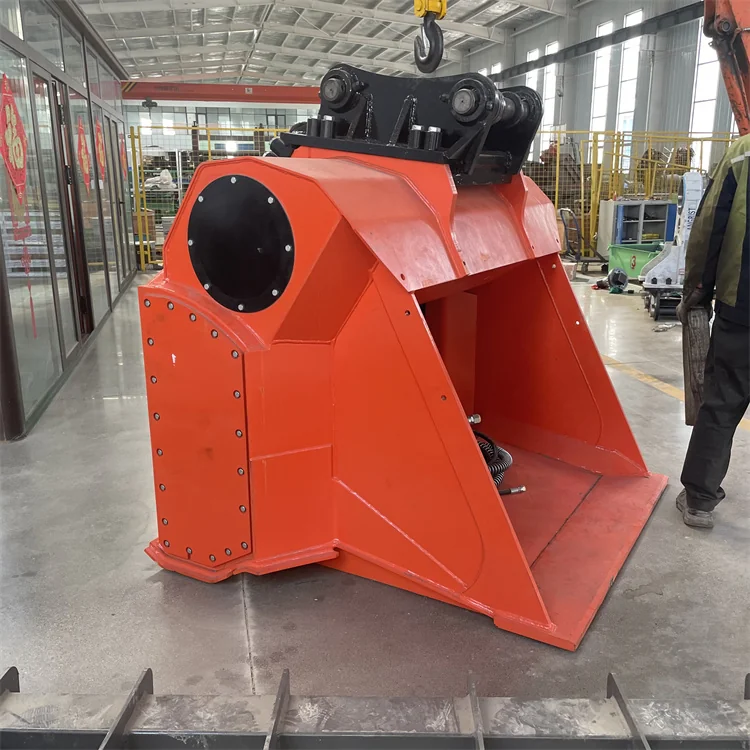
On-site soil screening and processing
Recover material for trench backfill
Break up soft soil clods and separate larger stones near the excavation. Where the processed fraction meets the project specification, it can be considered for reuse. Check the requirements for each zone. Pipe bedding and general backfill may have different limits on particle size, material composition, moisture, and compaction.
Prepare topsoil for landscaping
Separate stones and coarse debris from suitable topsoil while loosening clods that make the soil difficult to spread. Sort out large roots and debris before processing. Test a sample from the stockpile if the soil is very wet or sticky, since clay can coat the cutters and reduce the effective opening.
Blend soil amendments
Use the shaft action to blend suitable soil with a specified amendment where the job calls for it. Follow the project mix design for the proportions, moisture, and acceptance criteria. Check how evenly the amendment is distributed and allow for repeat passes or other mixing equipment where trial results show they are needed.
Process mixed excavation material
Evaluate weathered soft rock or friable debris in a representative batch before processing the whole stockpile. Separate hard oversize, steel, and other unsuitable items first. Keep the passing material and retained oversize in separate piles so you can test them, reuse suitable material, or route oversize to the next processing step.
Check excavator and hydraulic compatibility
Send the exact excavator make and model so PAILIEN can review the mount and hydraulic circuit against the proposed bucket. Check the combined weight of the bucket, coupler, and load against the excavator manufacturer’s limits at the intended reach and position. Include mounting dimensions and hydraulic specifications in the compatibility review.
| What to check | What to send | What it helps confirm |
|---|---|---|
| Carrier and mount | Excavator brand and model, coupler type or pin dimensions, intended working reach | Mounting compatibility and loaded capacity at the work position |
| Auxiliary hydraulics | Available flow and pressure, return circuit details, existing case-drain connection if fitted | Motor requirements, allowable return pressure, and whether a case drain is required |
| Feed material | Material type, moisture, proportion of stone, largest pieces, and stockpile photos | Feed suitability, likely sticking or blockage, and any need for pre-sorting |
| Finished material | Target grade, intended use, volume, and production schedule | Cutter setup, trial acceptance criteria, and production estimate |
Compare three excavator bucket types
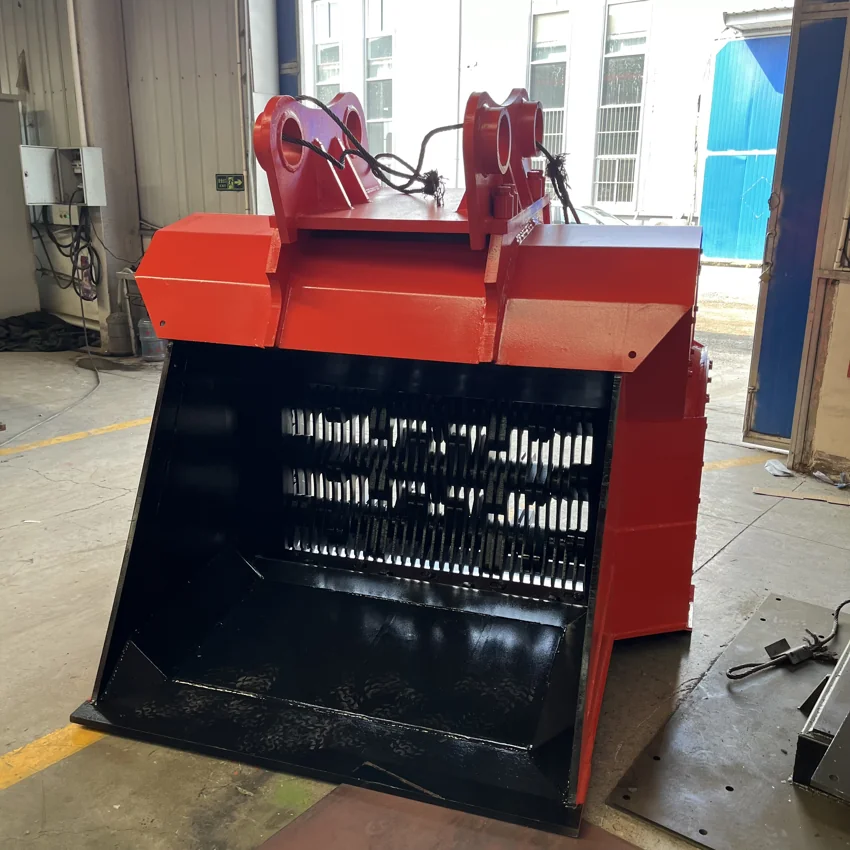
Rotary screening bucket
Choose a rotary screening bucket when loose soil, gravel, or crushed aggregate already contains the sizes you want to separate. Its rotating drum grades the feed through a screen.
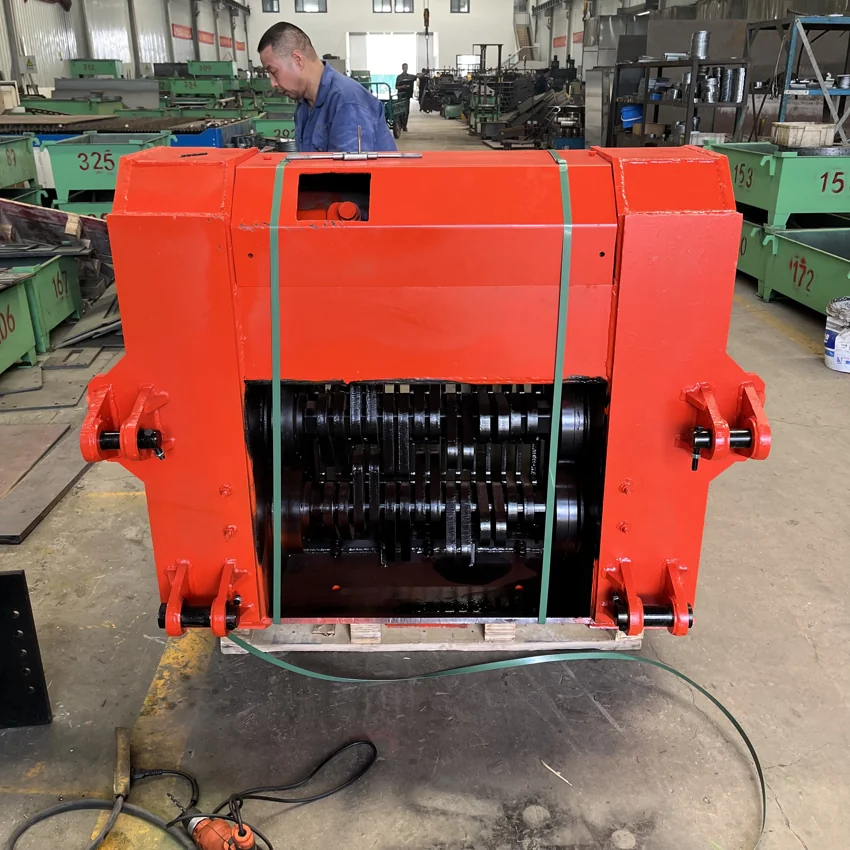
Screening crusher bucket
Choose a shaft-type screener crusher when soft clods need to be broken up during screening, or when the job also requires blending suitable materials. Confirm the cutter setup and test the feed.
Jaw crusher bucket
Choose a jaw crusher bucket when suitable rock or concrete needs to be broken into smaller pieces between fixed and moving jaws. Check the feed opening and screen the crushed material afterward if the job requires a defined grade.
Use a trial to estimate production
Time the complete cycle, from loading the bucket to clearing the retained material. Include time spent sorting feed, repositioning the excavator, clearing blockages, and moving finished material. Record how much falls through and how much actually meets the project specification. Base the production estimate on the quantity that meets the requirements for its intended use.
Sample both typical and difficult feed. If one part of the site contains wet, sticky clay and another contains dry, friable soil, test them separately and estimate how often each will occur. This gives you a better basis for planning than a single trial on the easiest stockpile.
Ask about replacement cutter assemblies, inspection points, and the lead time for wear parts. Confirm whether the quoted configuration includes reverse rotation and hydraulic overload protection. Follow the operating manual for clearing jams, maintenance, and any limits on hydraulic settings.
Plan how each material stream will be used
Start with the material you need at the end of the job. A utility contractor may need screened fill close to a trench. A landscaping crew may need soil that spreads evenly. A contractor blending soil for an engineered application may need to meet a mix design as well as a grading requirement. Tell us which of these requirements will determine whether a trial succeeds.
Keep different feed sources separate
Mark stockpiles by source if the excavation includes different soil layers or material from several areas. One pile may contain friable lumps, while another may hold stones that stay intact. Testing them separately shows how much each pile contributes to the usable output and identifies which loads need sorting before they reach the bucket.
Set a destination for retained oversize
Decide whether the retained material goes to a separate stockpile, another processing step, or off-site disposal. If a trial leaves mainly hard stones, a repeat pass through the same shafts is unlikely to produce much additional soil. If the retained material still contains breakable clods, compare the extra usable yield with the time required for a second pass.
Compare the complete handling cost
When comparing on-site processing with hauling and buying replacement material, count the full sequence. Include pre-sorting, screening time, handling both piles, testing the finished material, and hauling whatever cannot be reused. The cost comparison depends on the amount of usable material recovered, local haulage and material prices, and the time saved elsewhere in the job.
Use trial results to check the configuration
When documenting a material trial, record which cutter setup was used, what was loaded, and what the processed material looked like. Record your excavator details and required output alongside the trial results. You can then check that the proposed cutter setup and operating requirements match the conditions used in the trial.
Screening crusher bucket FAQ
Can it process wet clay?
Some cloddy soil can be loosened by the shafts, but high moisture and strong adhesion can reduce output or block the gaps. Send photos or a sample of the actual feed and describe how wet it typically gets.
Can it crush granite or reinforced concrete?
Use this attachment for soil clods and suitable friable feed. Separate hard rock such as granite or basalt, reinforced concrete, and thick metal from the feed. Review those materials separately when choosing crushing or sorting equipment.
Can I change the output size?
The available cutter assemblies and gaps depend on the configuration. Share the target grading range so we can confirm the options and identify what should be checked in a material trial.
How much can I process per hour?
Throughput depends on the feed, moisture, stone content, cutter setup, and full cycle time. Send your target daily volume and expected working hours so we can review them against representative trial results where available.
Can one bucket screen and blend in the same job?
The shaft action can mix suitable material while it is being worked. For engineered soil mixes, verify dosage, mixing consistency, and finished performance against the project specification.
Request a screening crusher bucket quote
Tell us what is in your stockpile and what you need to produce. PAILIEN can review excavator fit and the cutter options for your application.
- Excavator model, mounting details, and auxiliary hydraulic flow and pressure
- Feed type, moisture, maximum piece size, and photos or video
- Required output grade, intended use, and total volume or target production rate