
PAILIEN · Excavator Attachment Solutions
Excavator Attachments
Find the right attachment for your rock cutting, vegetation clearing, crushing and screening work.
Compare seven product ranges and plan your equipment around your excavator, your material and the result you need.
Put your excavator to work on the next task
Your excavator can do more than dig and load. With a compatible hydraulic attachment, you can assess cutting, clearing and material processing at the work area, using the reach and positioning capability of your existing carrier. The right choice starts with the problem you need to solve: shaping a rock face, handling timber, reducing brush, breaking suitable rubble or separating excavated material.
This collection brings the seven attachment ranges together so you can compare their roles before exploring individual models. Each product page provides a closer look at the equipment and selection considerations. Hydraulic requirements, mounting details and operating limits must be confirmed for the specific attachment and carrier combination.
Explore seven excavator attachment ranges
Choose by the work you need to improve, then open the product page to review the equipment in more detail.
Controlled rock and concrete cutting
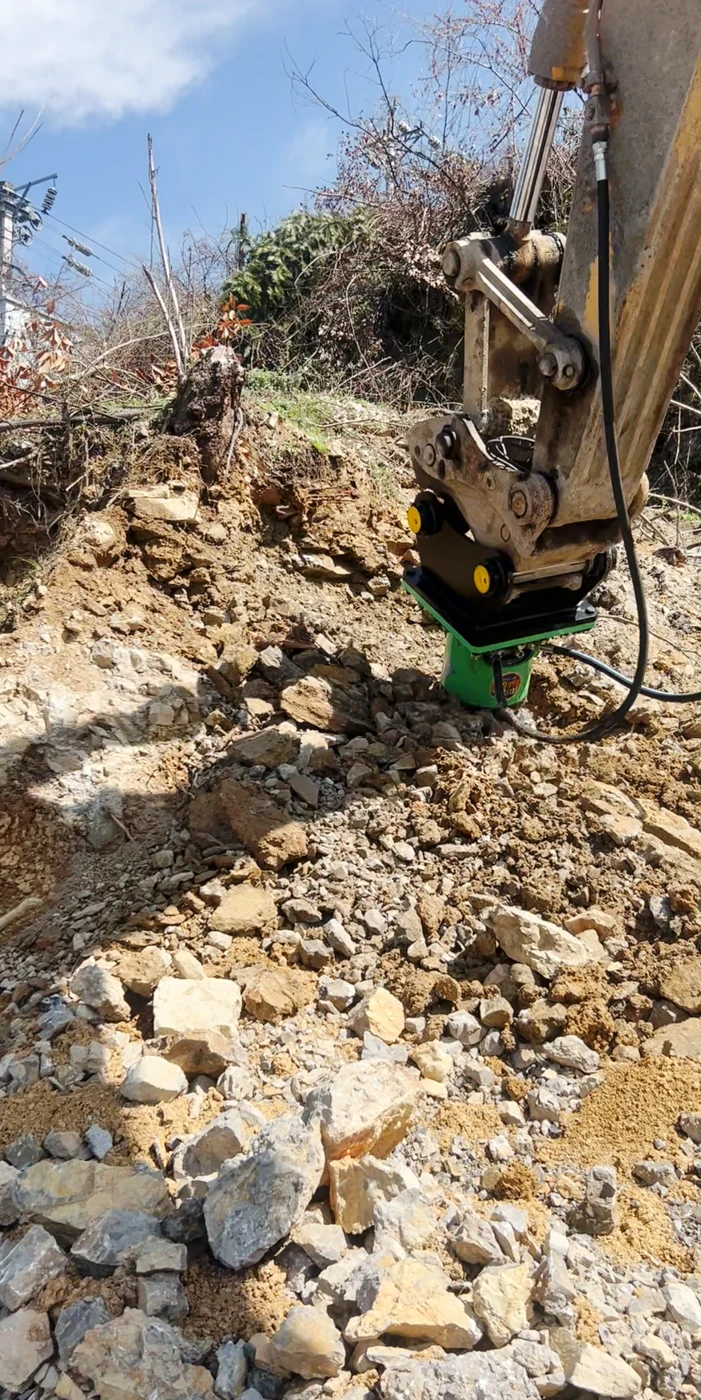
Excavator Drum Cutters
When a bucket cannot shape a hard surface accurately enough, an excavator drum cutter lets you work across the face in smaller passes. Review this attachment for tunnel profiling, trench work, rock excavation and local concrete removal. You can compare transverse and axial cutting arrangements against the space around the work. Material strength, abrasiveness, fractures and the required finish all influence selection. Send your excavator details and photos of the cutting area so we can help you assess the configuration, access and wear parts before you commit to a machine.
Grip and cut suitable timber
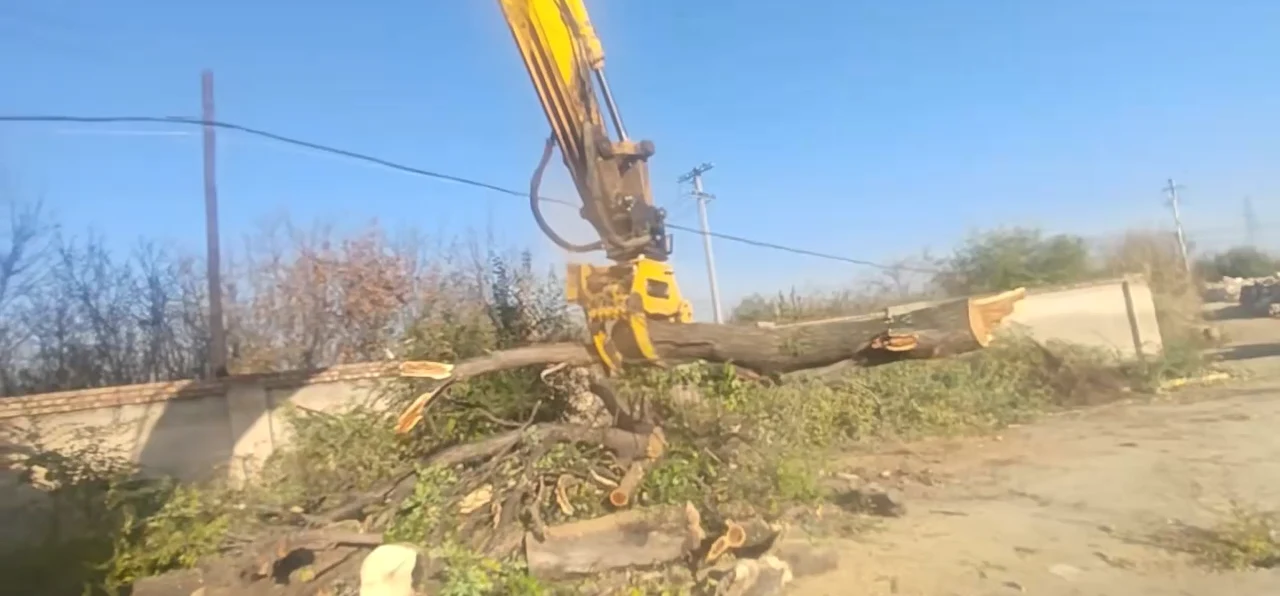
Excavator Grapple Saws
A grapple saw combines a gripping arrangement with a cutting unit, helping you manage suitable branches and timber with your excavator. It is a useful option to review when handling and cutting are separate steps that keep interrupting your workflow. Choose around the timber dimensions, required reach and the way cut sections will be placed. Carrier stability, attachment weight and mounting geometry matter as much as the cutting arrangement. Review the product page for the equipment configuration and discuss your site conditions with us before deciding how to organise the work.
Clear brush and manage vegetation
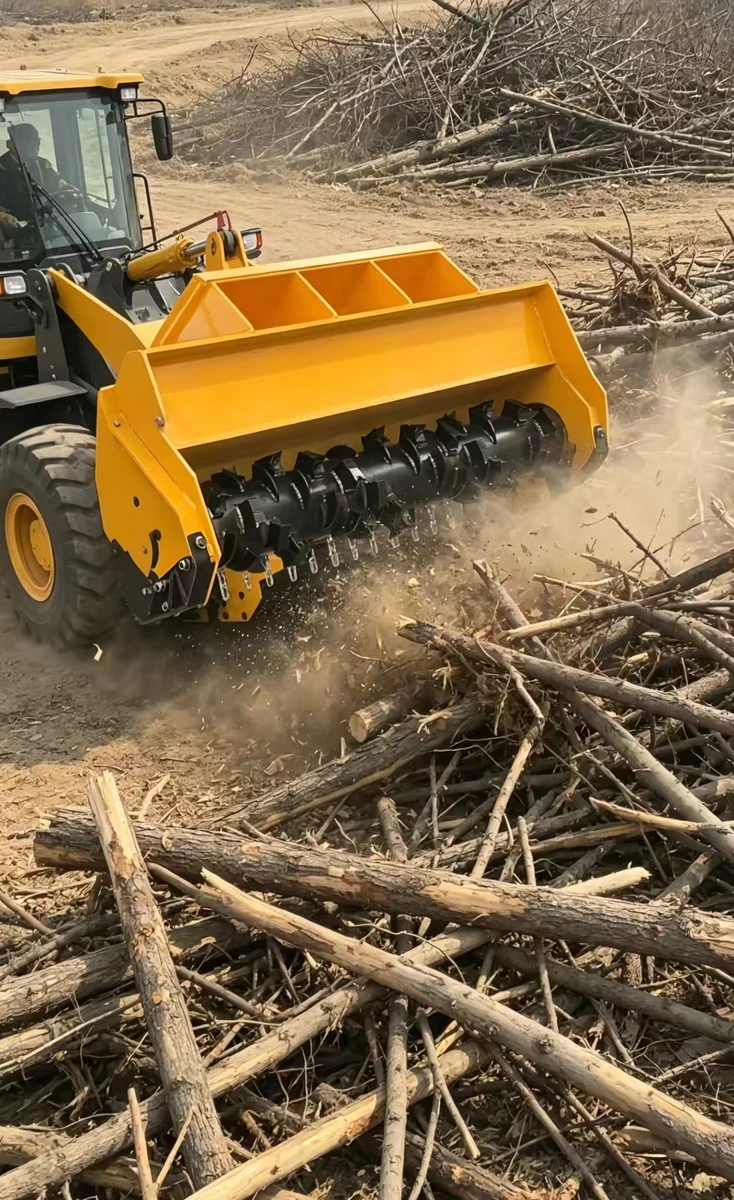
Excavator Forestry Mulchers
An excavator forestry mulcher reduces suitable brush and woody vegetation where the excavator can reach, helping you reopen access routes, maintain vegetation corridors and manage overgrown ground. It is worth considering when collecting and moving every cut branch creates extra handling. Match the head to the vegetation, expected ground conditions and your desired finish. Mulching leaves processed material at the site; it does not automatically remove roots or prepare a clean construction formation. We can help you review carrier compatibility, rotor access and replacement cutting tools for your proposed clearing work.
Reduce suitable rubble at the worksite
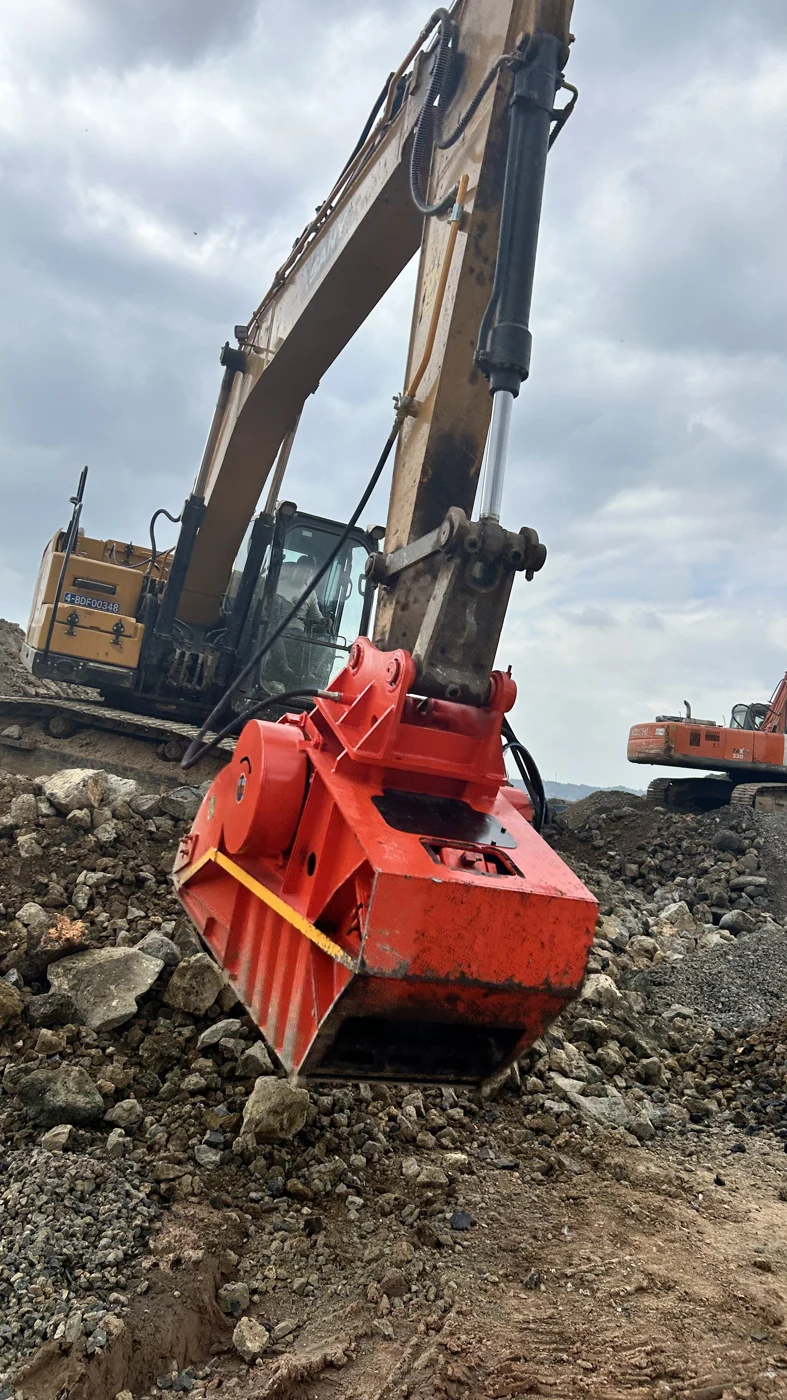
Excavator Jaw Crusher Buckets
A jaw crusher bucket uses the excavator to feed and process suitable material at the work area. You can assess it when transporting large pieces to a separate crusher adds avoidable handling. Selection depends on feed dimensions, material characteristics, the desired output and the carrier available. Concrete containing reinforcement needs a specific preparation and metal handling plan. Reuse also depends on your project specification and any required testing. Compare the product details, then send representative material photos and your intended use so we can discuss a workable processing arrangement.
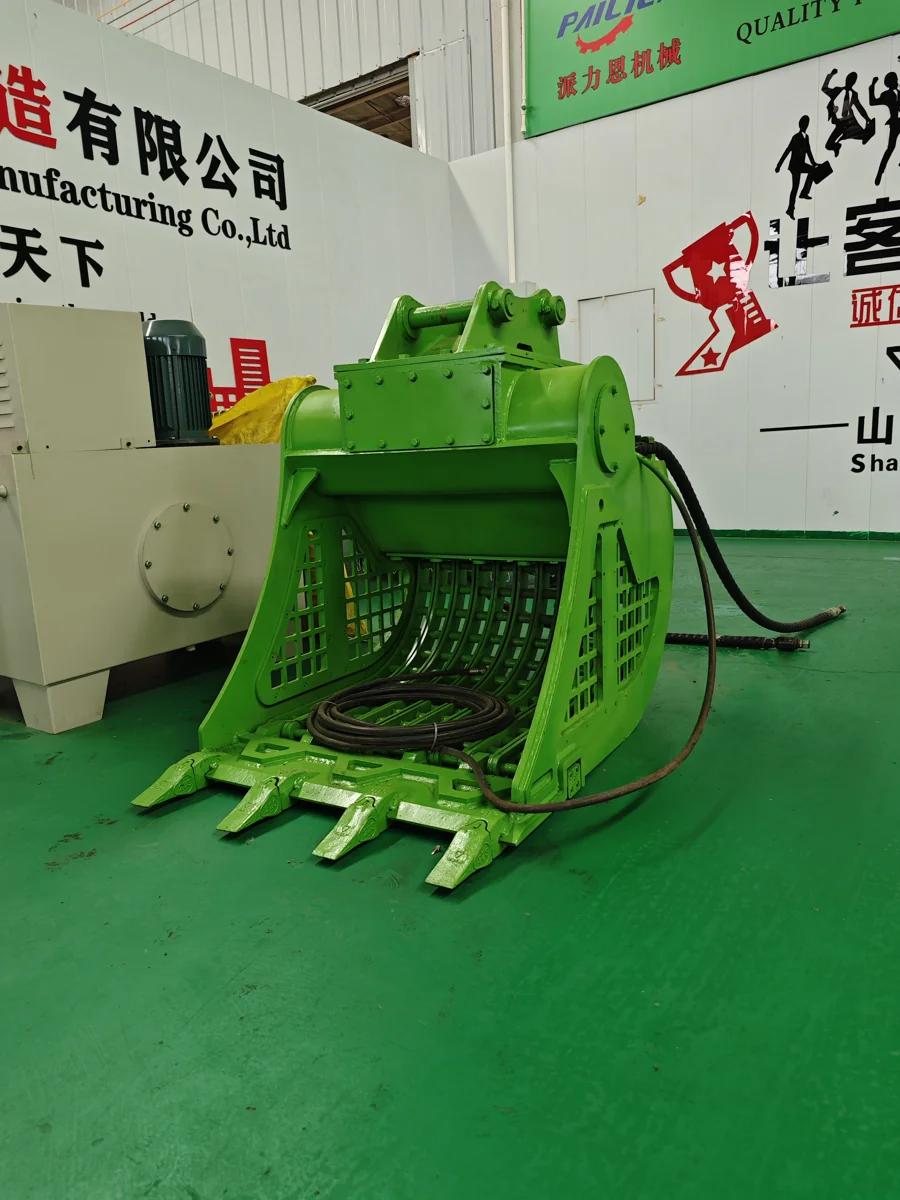
Separate material with a vibrating screen
Excavator Vibrating Screening Buckets
A vibrating screening bucket is an option to review when you need to separate a suitable feed into fractions using a vibrating screening surface. Your material, target separation and handling arrangement determine whether it fits the job. Moisture, clay content and oversized pieces can change how the feed behaves, so a dry demonstration may not represent your site. We can help you compare the screen arrangement and hydraulic requirements for your excavator. For difficult material, discuss a representative trial and define the result you want before relying on an estimated production rate.
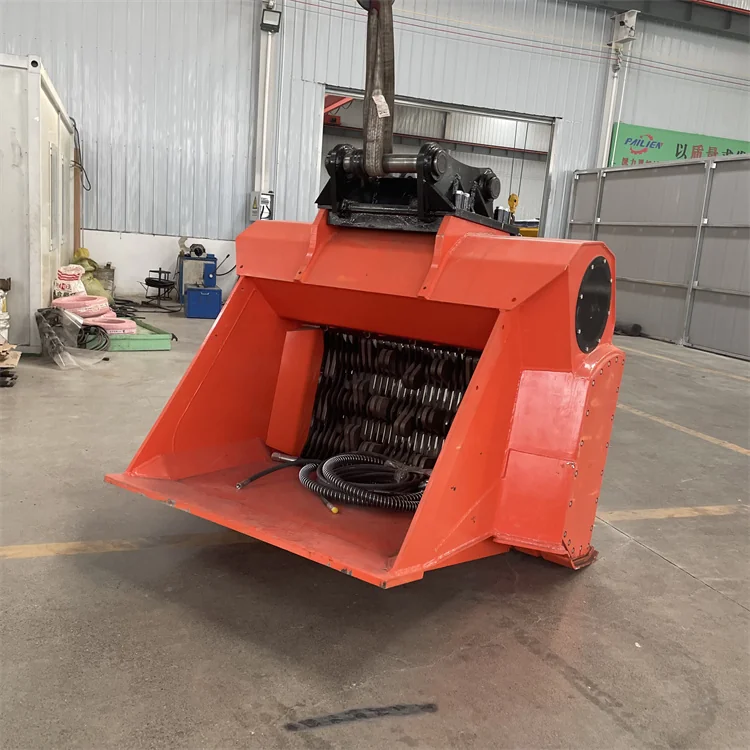
Screen, loosen and process suitable material
Excavator Screening Crusher Buckets
A screening crusher bucket uses its working shafts to screen and process suitable material, depending on the installed tools and configuration. Review it for tasks such as soil preparation, loosening compatible feed and separating or mixing material where the selected equipment supports the process. It serves a different purpose from a jaw crusher bucket and should be selected against the actual feed rather than the product name alone. Tell us about contamination, moisture, lump sizes and the required result. We can then help you identify the configuration and trial questions that need attention.
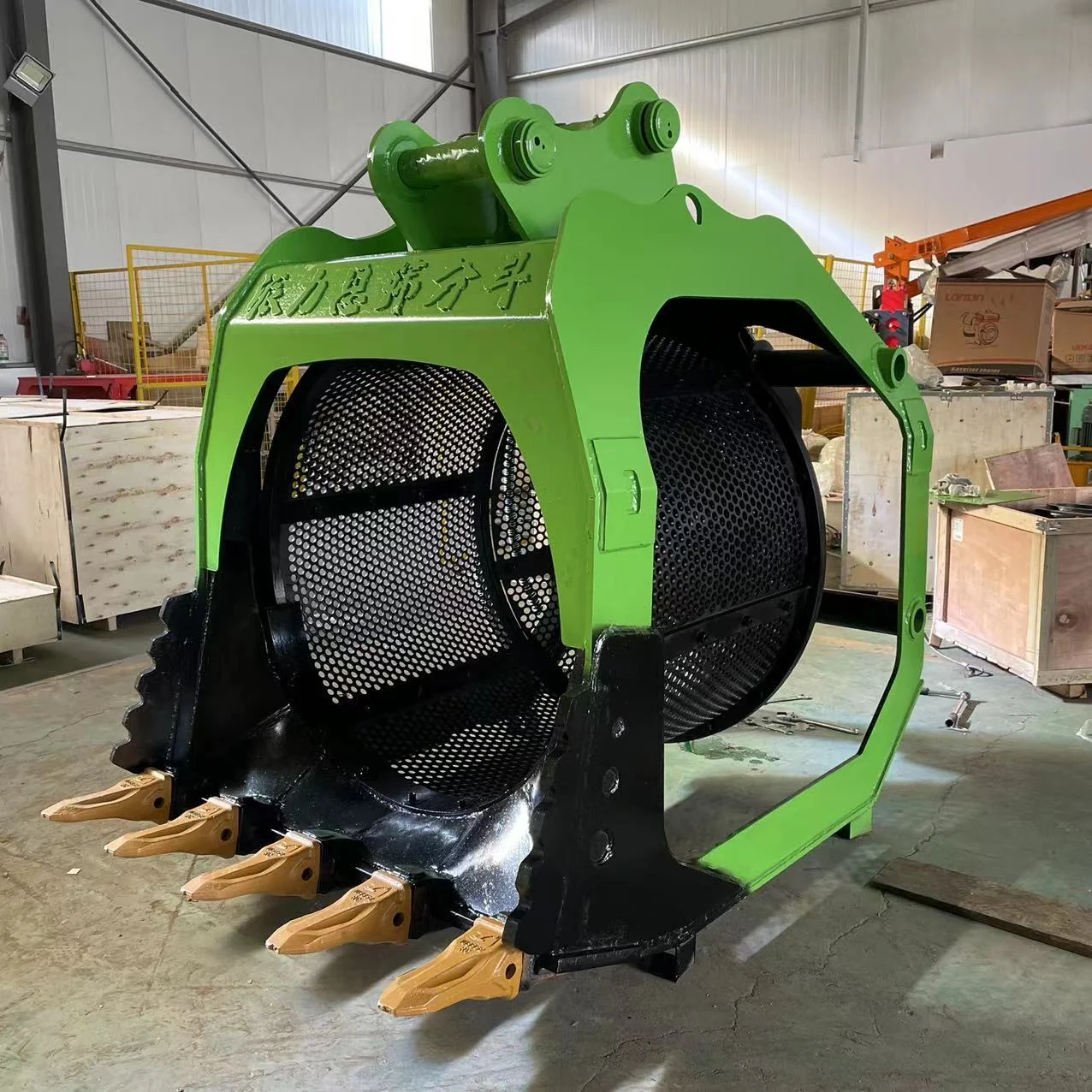
Sort suitable soil, stone and aggregate
Excavator Screening Buckets
A rotary screening bucket separates suitable material through its screening drum. Consider it for sorting excavated material, separating oversized pieces and preparing selected fractions where the project allows their use. Start with the separation size and feed condition, then review the drum, bucket capacity and excavator requirements. Sticky clay or wet feed can reduce separation effectiveness and may need a different approach. Use the individual product page to explore the equipment, and share your material photos and screening target so we can help you compare the available options.
Start with your site problem
Shape a difficult surface
If you need to remove local high spots or follow a profile, compare a drum cutter with the space and material at the work face. Plan the cutting direction, access and removal of loose material together. This helps you evaluate the full task rather than the cutting head alone.
Reduce repeated handling
If branches, vegetation or rubble keep moving between separate work areas, review whether a compatible attachment can complete part of the process closer to the source. Check the handling sequence and remaining disposal work so the proposed change addresses the actual delay.
Separate material for its next use
If mixed excavated material creates extra transport or storage, define which fraction you need and how it will be used. Then compare screening mechanisms and feed preparation. Any reuse must meet the project requirements; separation alone does not certify the finished material.
Choose a processing method that fits your material
Crushing and screening solve different problems. A jaw crusher bucket is intended to reduce suitable feed by compression. A screening bucket separates fractions through a selected opening. A vibrating screening bucket uses a vibrating surface, while a screening crusher bucket works with a shaft and tool arrangement whose functions depend on the configuration. The product names do not make these machines interchangeable.
| Your task | Range to review | What to confirm |
|---|---|---|
| Profile rock or remove local concrete | Drum cutters | Material, access, cutting geometry and wear |
| Grip and cut suitable timber | Grapple saws | Timber size, reach, handling plan and stability |
| Reduce brush and woody growth | Forestry mulchers | Vegetation, terrain and desired finish |
| Reduce suitable rubble | Jaw crusher buckets | Feed size, contaminants and required output |
| Separate excavated material | Rotary or vibrating screening buckets | Separation target, moisture and clay content |
| Screen and process compatible feed | Screening crusher buckets | Shaft tools, feed behaviour and trial results |
Match the attachment to your excavator
Hydraulic compatibility
Tell us the available auxiliary flow, working pressure and circuit arrangement. Depending on the attachment, return line conditions, a case drain or additional control functions may also need review. A carrier weight range alone does not confirm hydraulic compatibility.
Mounting and working reach
Share the excavator model, coupler details or pin dimensions. Review attachment weight and the planned working position against the carrier limits. Allow space for hoses, movement and service access, especially when working close to walls, trees or trench edges.
Material and finish
Send clear photos, representative dimensions and any available material information. Explain the output or surface you need. Where feed conditions vary, a trial with representative material can help establish whether the proposed setup achieves the required result.
Support for your equipment decision
You do not need to select an attachment from a photograph alone. PAILIEN can help you review the carrier information, intended work and product configuration, then identify the points that need confirmation before ordering. Ask about the proposed mounting arrangement, hydraulic connections, supplied components and available wear parts for the specific model.
For your enquiry, include the excavator make and model, operating weight, hydraulic specifications and mounting dimensions. Add photos or a short video of the site and material, together with your required cutting profile, timber dimensions, output size or screening target. Let us know your destination and preferred delivery arrangement so we can prepare an equipment proposal around your requirements.
YOUR EXCAVATOR · YOUR APPLICATION
Tell us what you need to get done
Share your excavator details and the task that is slowing your project. We will help you compare the relevant attachment range and clarify the configuration questions for your site.